
AV Case Study: ECU City, WAAPA
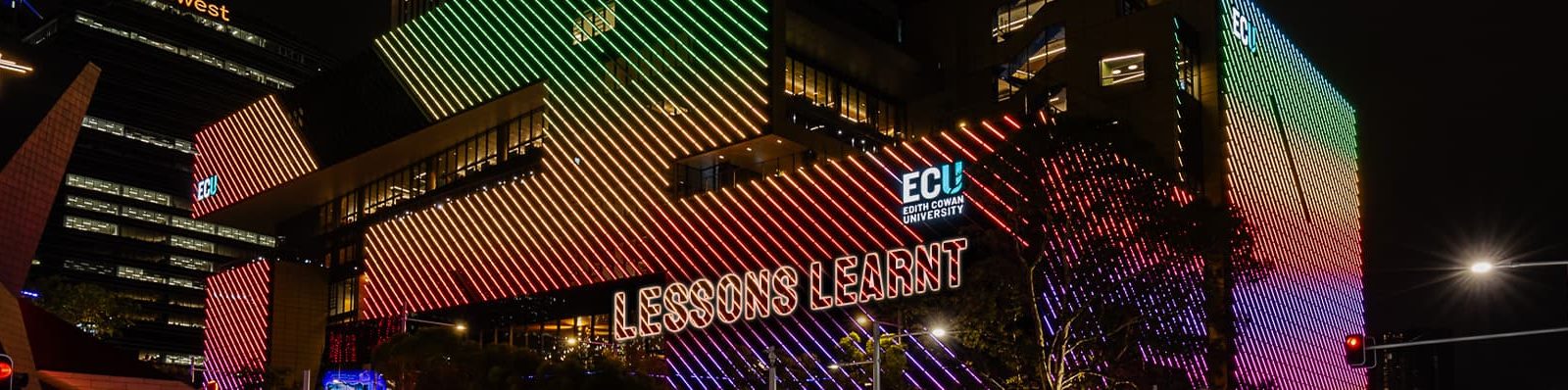
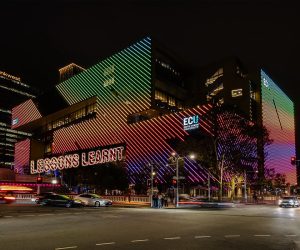
The West Australian Academy of Performing Arts (WAAPA) and the School of Arts and Humanities have a new high-rise home at the Edith Cowan Uni city campus. Things are looking up.

11 August 2026
The West Australian Academy of Performing Arts (WAAPA) and the School of Arts and Humanities have long been powerhouses of Australian creative education. Their move into Edith Cowan University’s new city campus in Perth’s CBD presented a radical shift: from a sprawling suburban site to a tightly packed multi-storey vertical campus smack-dab in the middle of the city. Eight theatres of each description, rehearsal rooms, broadcast facilities, an Atmos mixing theatre, surround sound mix suites and edit rooms are now interwoven across multiple levels.
The challenge was clear. These spaces could no longer function in isolation. And indeed, the various WAAPA streams and disciplines could no longer function in isolation. The spaces needed to operate as a single, flexible ecosystem – able to support live performance, assessment, teaching, remote collaboration and pro-standard production at the flip of a coin. The audiovisual infrastructure had to act as both nervous system and arterial network, carrying media, comms and control wherever they were required.
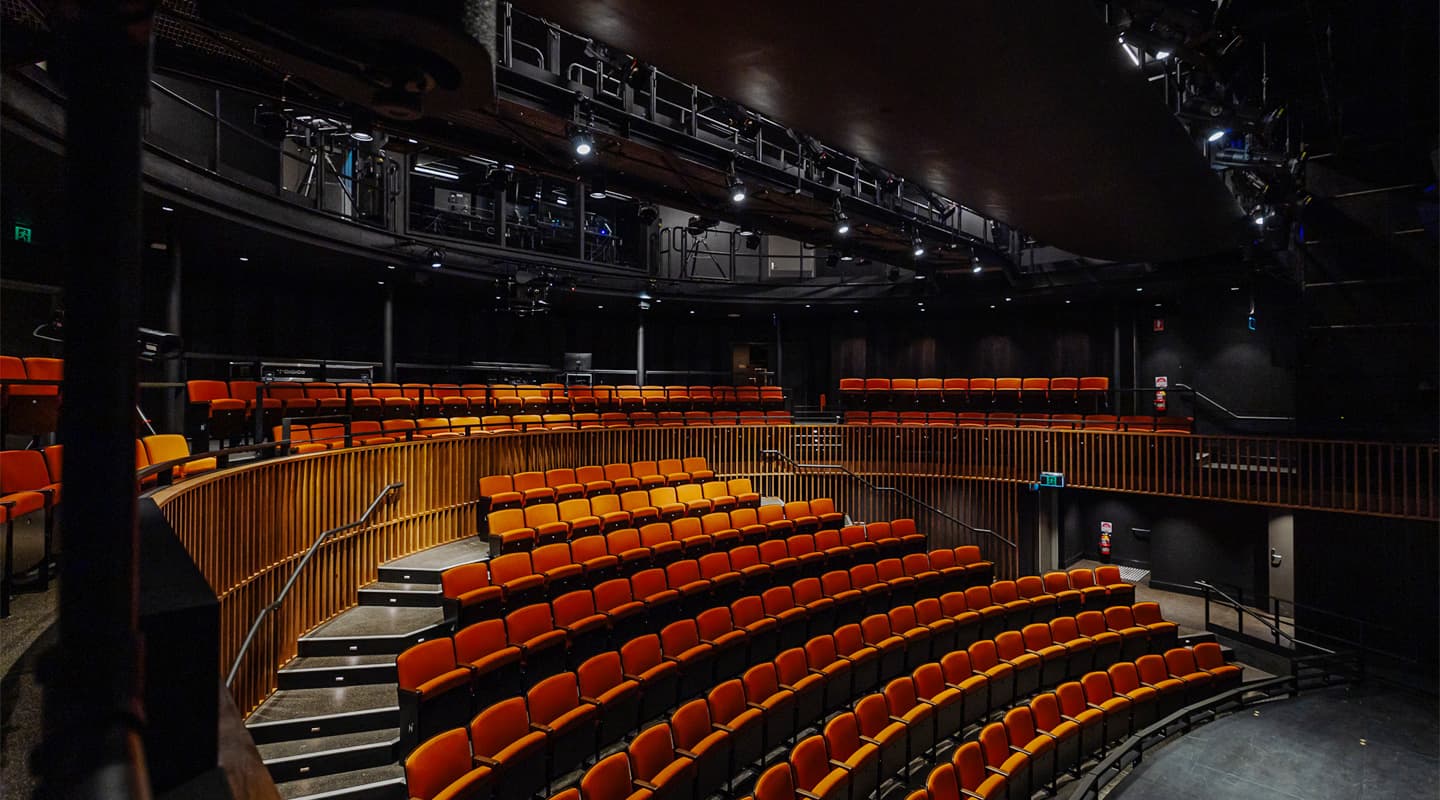
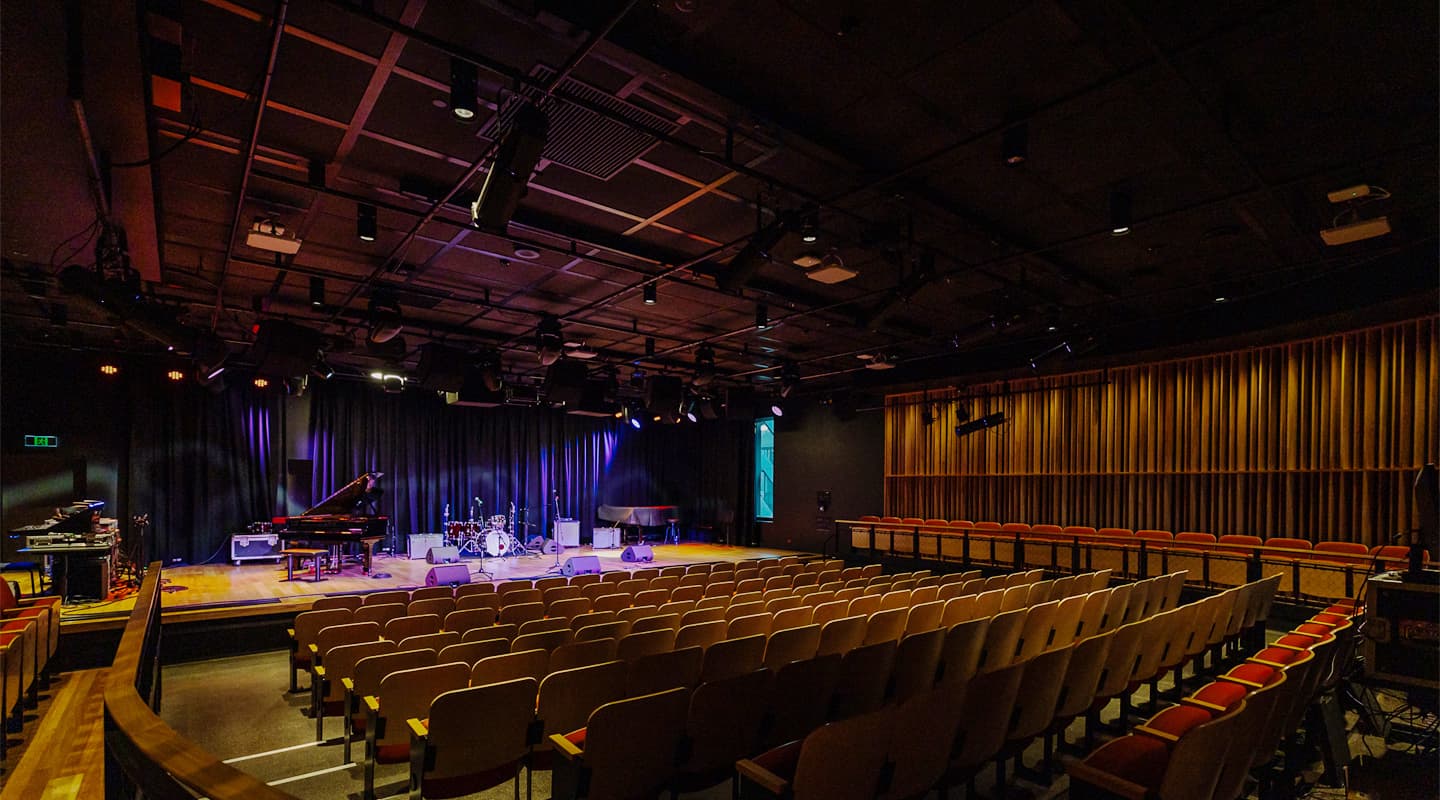
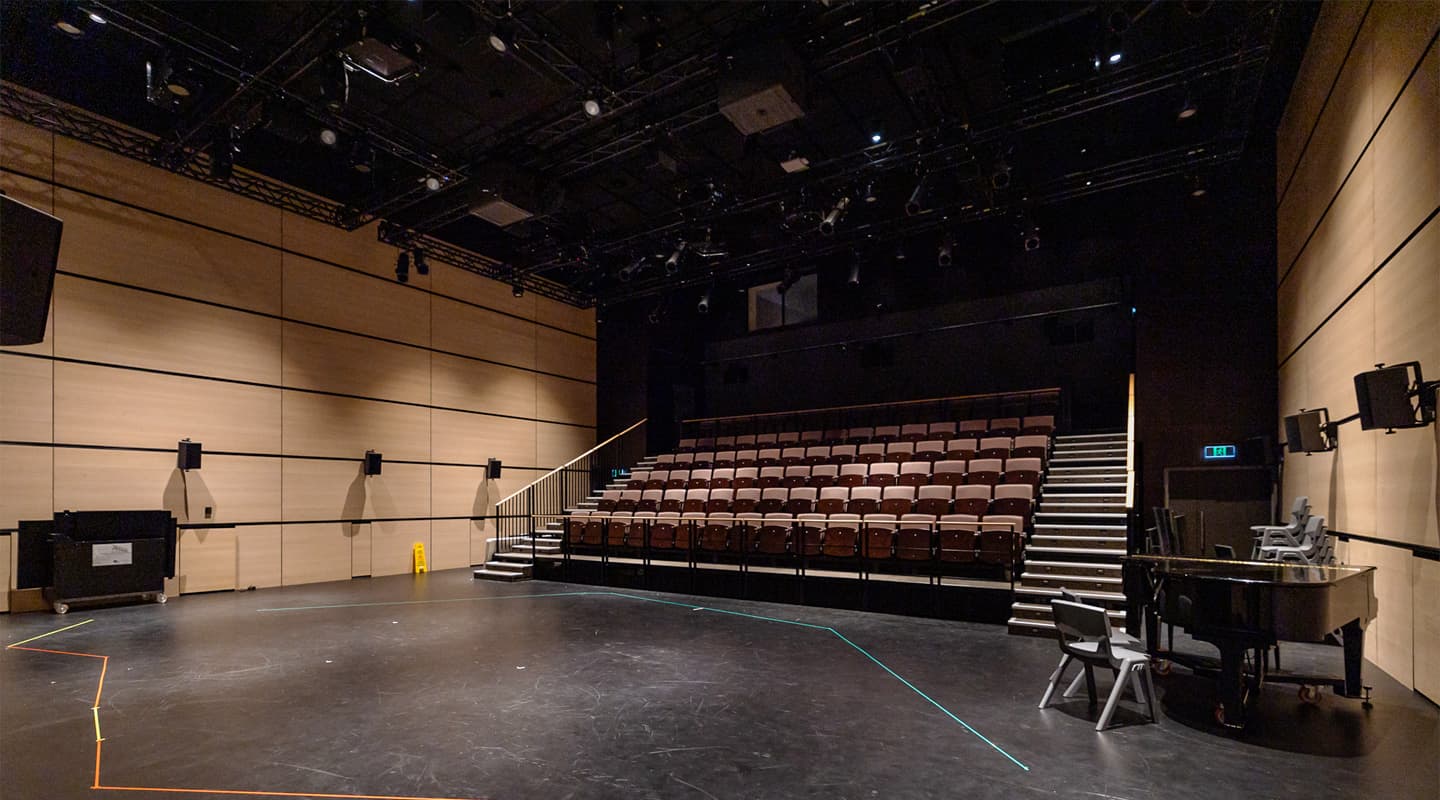
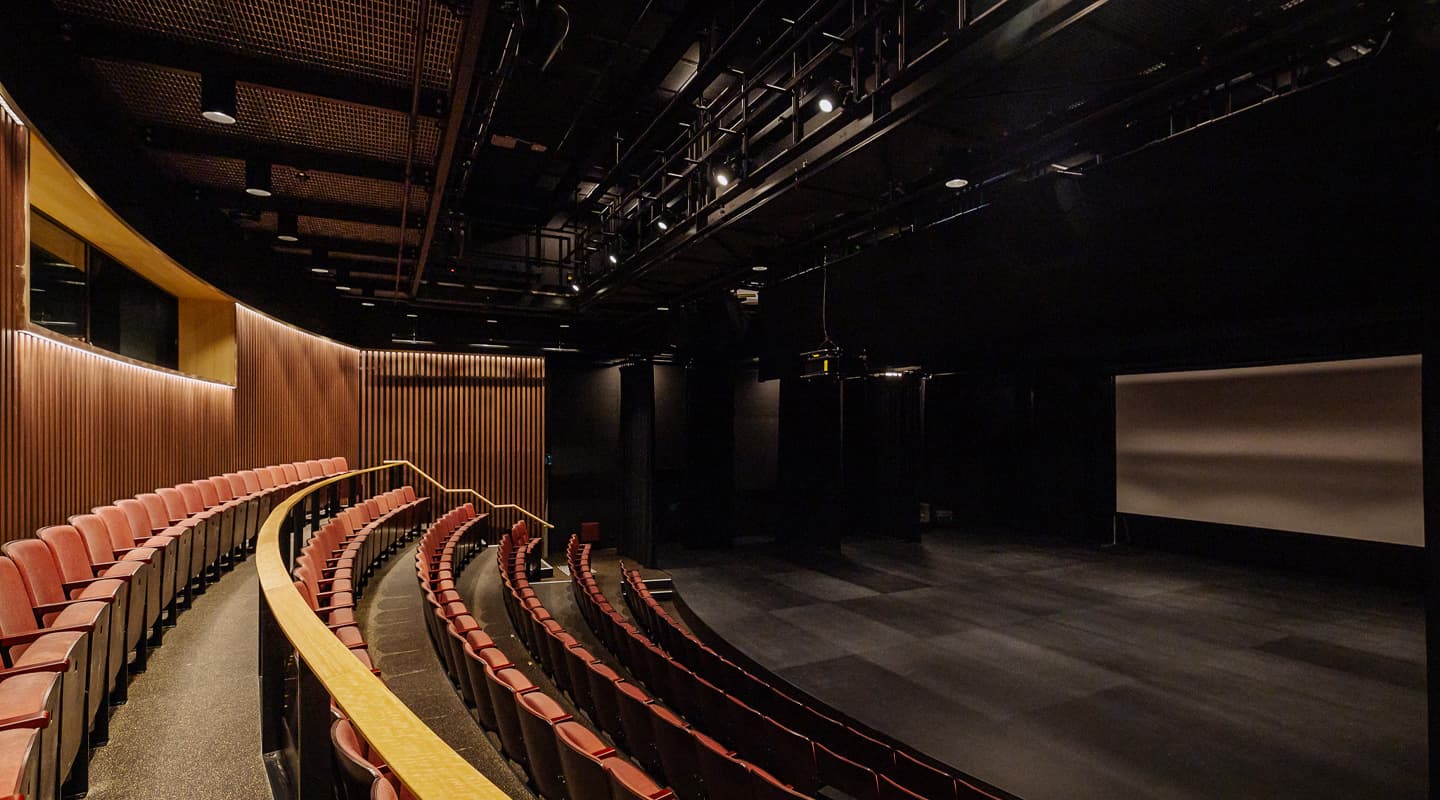
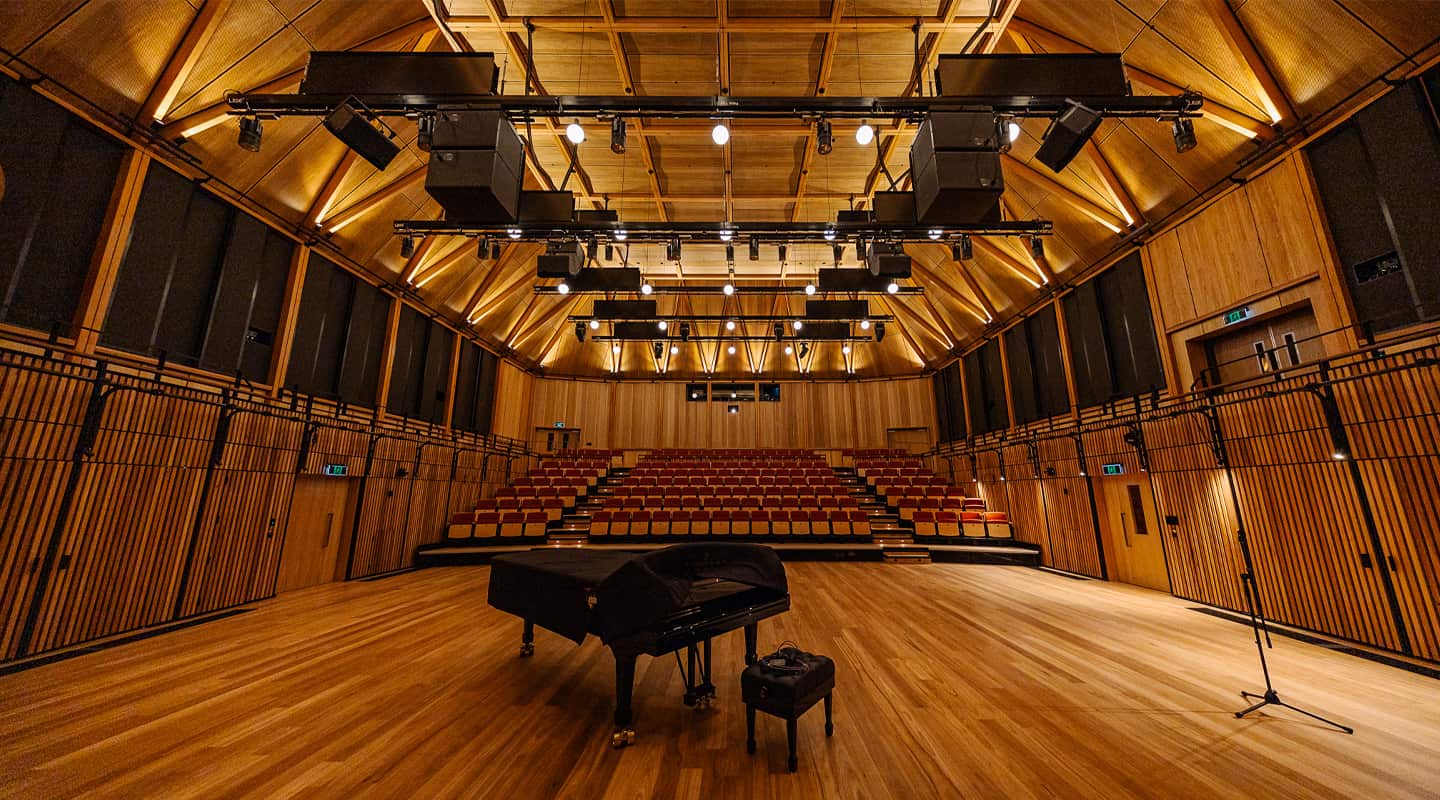
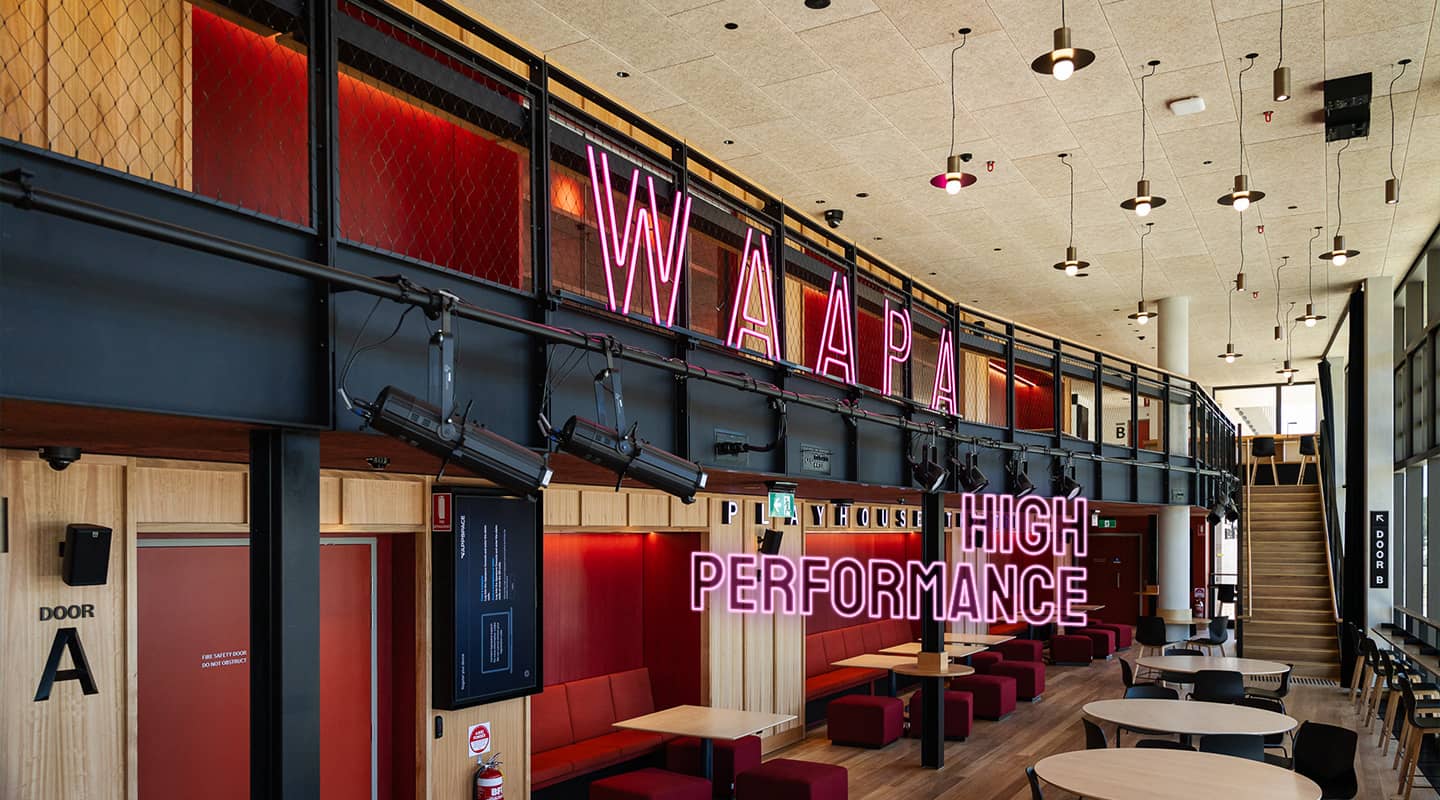
Need a theatre? WAAPA has an example of every main theatre format, from a Playhouse and Recital Hall to a Black Box.
Russell Proud, Senior Consultant at Charcoalblue and theatre lead on the project from concept through to completion, describes the scale: “We worked on over 100 spaces within the building – eight performance venues ranging from a senior drama theatre and dance theatre through to a black-box flexible space, jazz contemporary room and two rehearsal rooms that can also function as performance spaces. There’s a clear tiering: fully-equipped venues at the top, then hybrid spaces that can bring in an audience so students can meet assessment criteria without needing a dedicated theatre for every performance.”
That multi-purpose reality drove every design decision. “We’ve gone from seven acres to seven storeys,” Russell says poetically. “Taking advantage of the vertical stack, we looked at how we could integrate the technology across the building so it’s one big ecosystem rather than bits and pieces that only make one room work.”
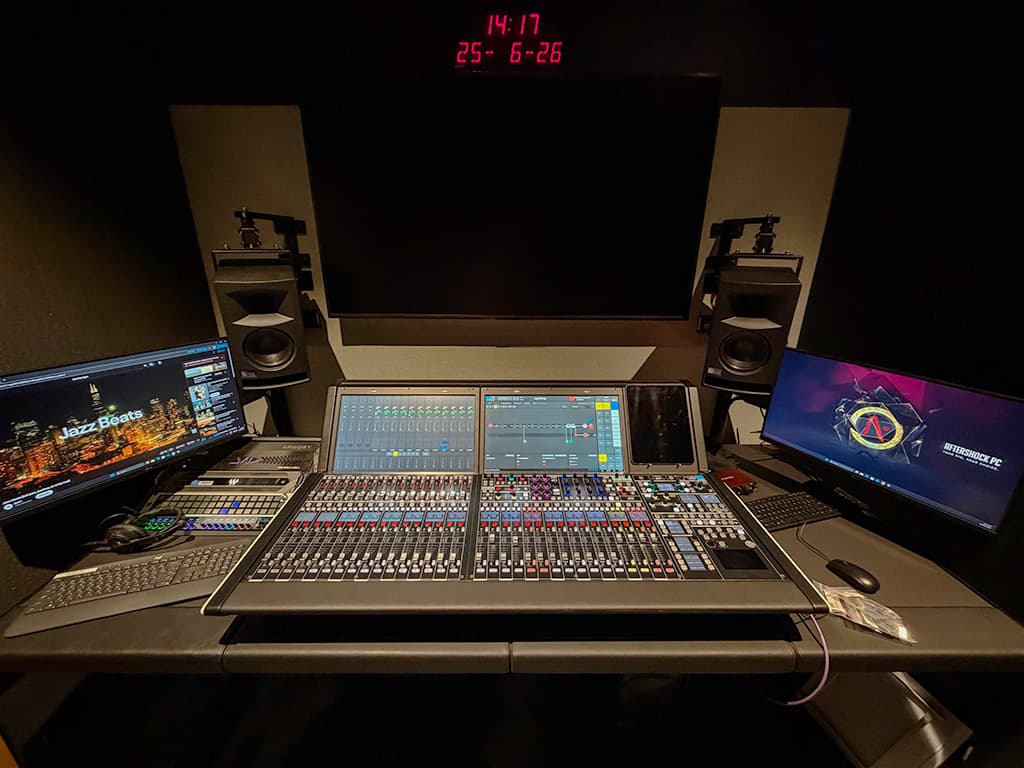
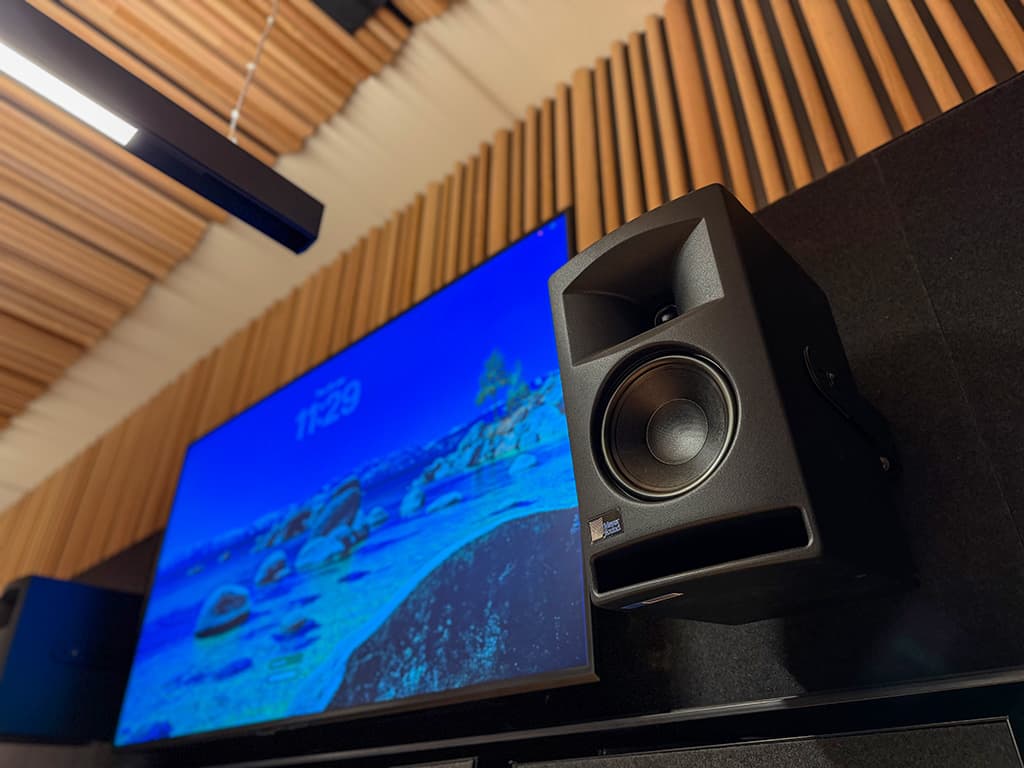
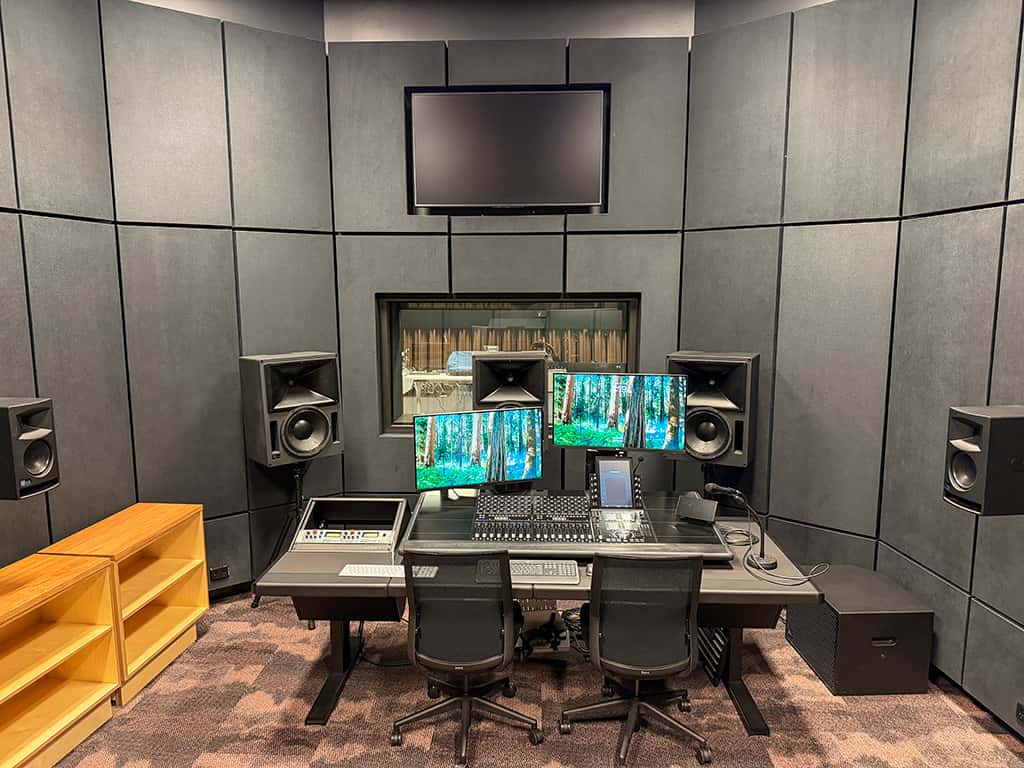
Meyer Sound Acheron and Amie studio monitoring with companion subwoofers are used throughout, from the Dolby Atmos-certified Output Theatre through to individual mix suites.
ONE BIG ECOSYSTEM
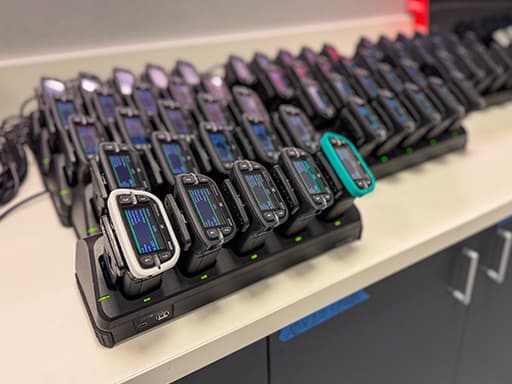
The aforementioned arterial network of that ecosystem is the Riedel MediorNet media distribution platform. And if MediorNet represents WAAPA’s arteries then Riedel’s Artist intercom frames and Bolero wireless might be regarded as its auditory system, providing low-latency, high-fidelity comms across the campus.
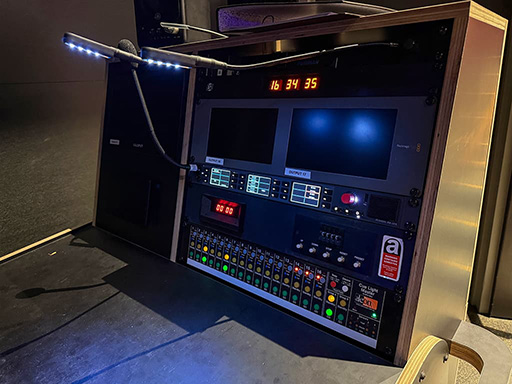
Paul Beard, Senior Project Manager at Diversified – the integrator responsible for the specialised performance and broadcast systems – explains the role of Artist and Bolero: “The Riedel system is a state-of-the-art network comms system throughout the building. It’s fully integrated via Bolero antennas so users can plug in anywhere between broadcast and the theatre systems. It’s very flexible and can essentially be rolled out anywhere.”
Dylan Curtois, Team Lead Commissioning at Diversified, adds the technical detail: “We have two Artist-1024 frames – one for WAAPA and one for broadcast – but we use them as an entire system. That means we can run a live theatre production in the Playhouse and integrate comms, video and audio all the way up to a separate live broadcast if required.” As far as MediorNet goes: “It’s a TDM fibre ring. Each Riedel Micron base unit can handle up to 400-gig single-mode fibre backbone, routing up to eight 12G 4K signals between units. The broadcast facility is native 4K.”
Portable MediorNet units and extensive fibre infrastructure mean an orchestra rehearsing in one space can feed a broadcast control room several floors away, or a student production can capture multi-camera content with real-time academic feedback without disrupting the show. Point-to-point comms allow a lecturer to ‘whisper’ guidance to a camera operator or follow-spot operator as if standing behind them – valuable for on-the-job learning.
Riedel’s SimplyLive RiCapture platform further support teaching. Multiple camera angles of a production desk, programme output and even the communications track can be recorded simultaneously. Staff and students can scrub back through the multi-view to analyse decisions in real time. “No one can hide,” Proud notes with a smile.
“”
The spaces needed to operate as a single, flexible ecosystem – able to support live performance, assessment, teaching, remote collaboration and pro-standard production at the flip of a coin
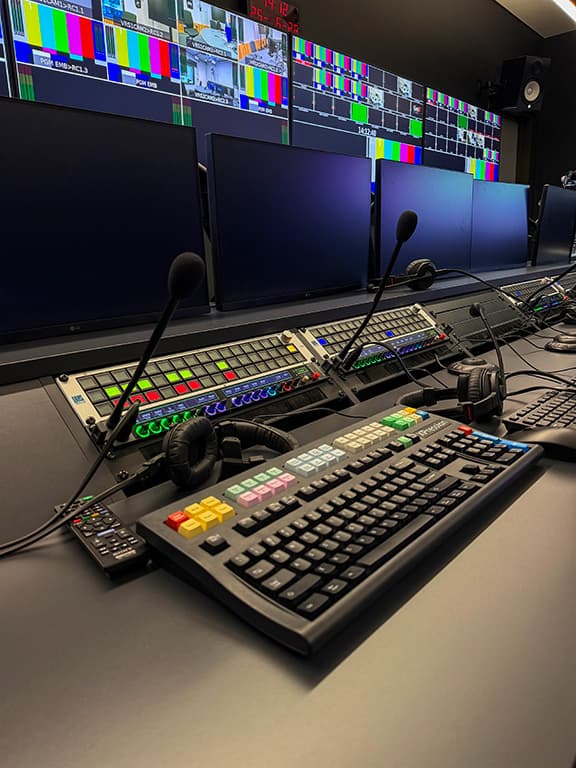
Riedel comms covers every nook and cranny of the site. Riedel Artist provides extended flexibility, offering handy group presets through to individual one-on-one comms. A significant stock of Riedel Bolero and Bolero Mini handle the wireless requirements.
INDUSTRY-STANDARD TOOLS
Across the audio and post-production spaces, the design team insisted on consistency and industry reference quality. Meyer Sound reference monitoring appears throughout the recording studios, edit suites, Foley room and Dolby Atmos-certified output suite.
Stuart James, Lecturer in Composition and Music Technology at WAAPA, emphasises the educational value: “The quality of the monitoring and the acoustics is excellent. Students are often used to mixing on headphones. Having access to linear, high-quality reference monitoring – particularly the Meyer Sound Acheron systems in the recording studios and Amie systems in the edit suites – gives them a stable anchor. They start to develop critical and even forensic listening skills that simply aren’t possible when the room or the speakers are the weakest link.”
Emir Salameh, Senior Tech Officer specialising in VFX and post-production, sees the same advantage in the large Output Suite: “We run a Meyer Sound Acheron surround system that is industry standard in many prominent post-production houses. Students can mix 7.1 or Atmos in a space that is on par with, or better than, most commercial facilities. That closes the gap when they move into the industry.”
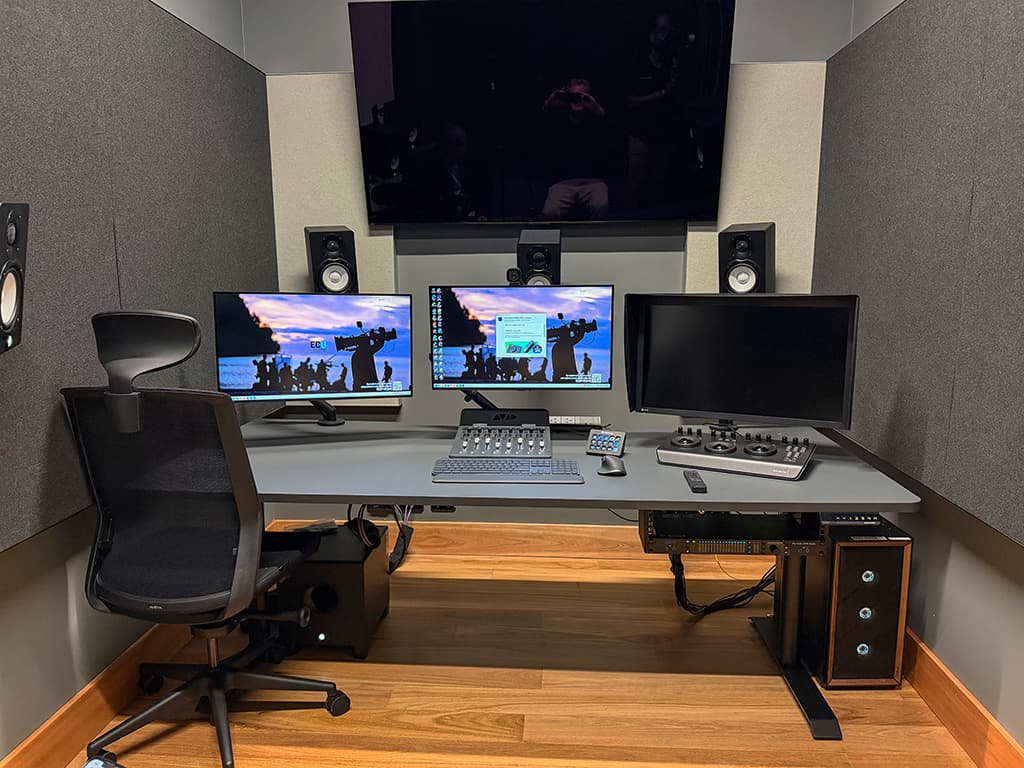
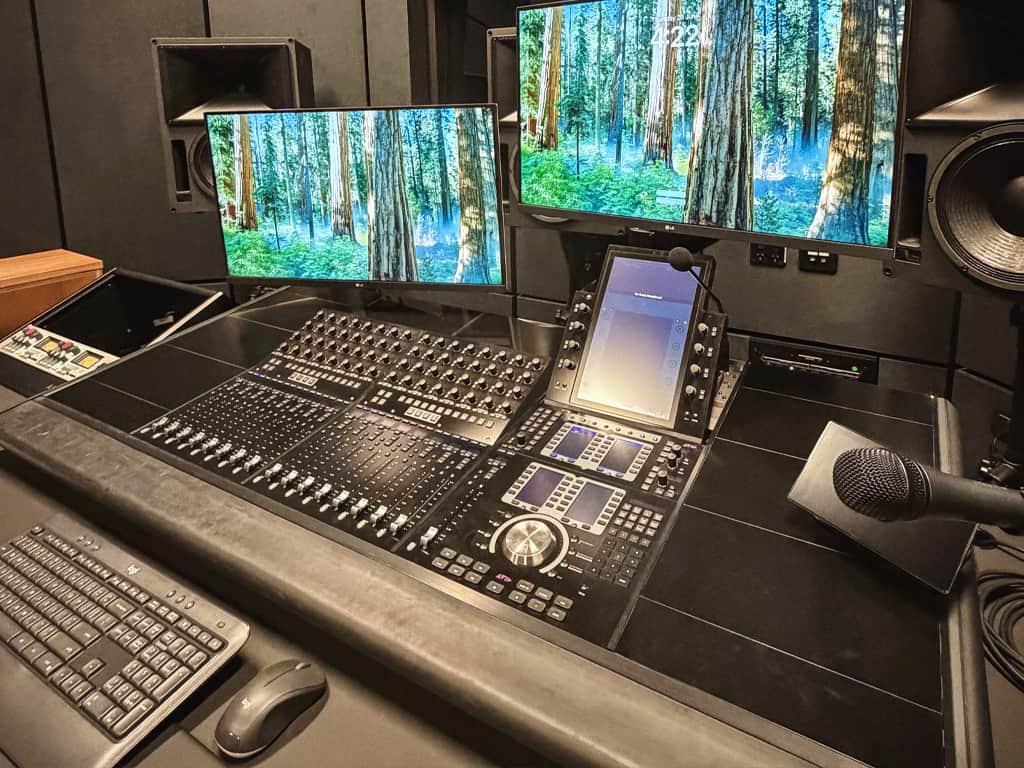
Avid control surfaces driving Pro Tools are the de facto WAAPA standard. S4 for larger spaces, such as the recording studios and output theatre, and the S1 for individual mix suites.
KEEN ON AVID
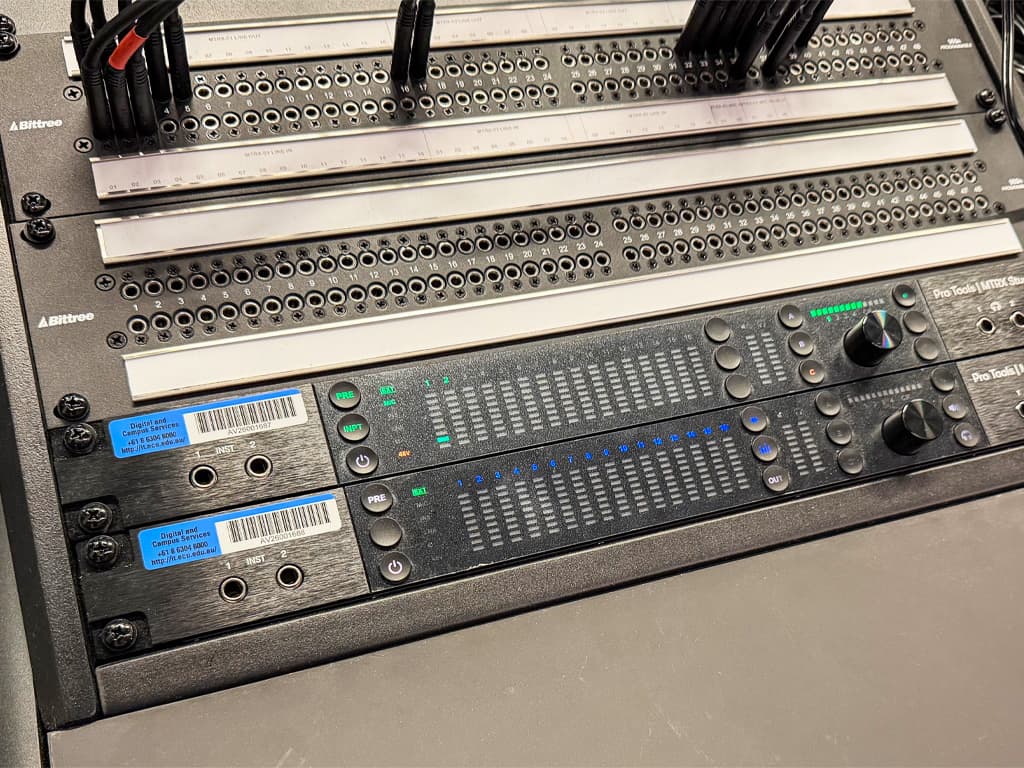
Avid hardware and software form the other half of the production workflow. S4 control surfaces dominate the larger studios and Atmos rooms, while S1s appear in edit suites. MTRX units handle routing and format conversion, and Pro Tools remains the common language.
“Students aren’t learning a different console every time they move rooms,” Russell Proud explains. “They’re learning how to make a program using the same workflow. When they walk out of ECU they are industry-ready – they’ve already been using the best-quality equipment available.”
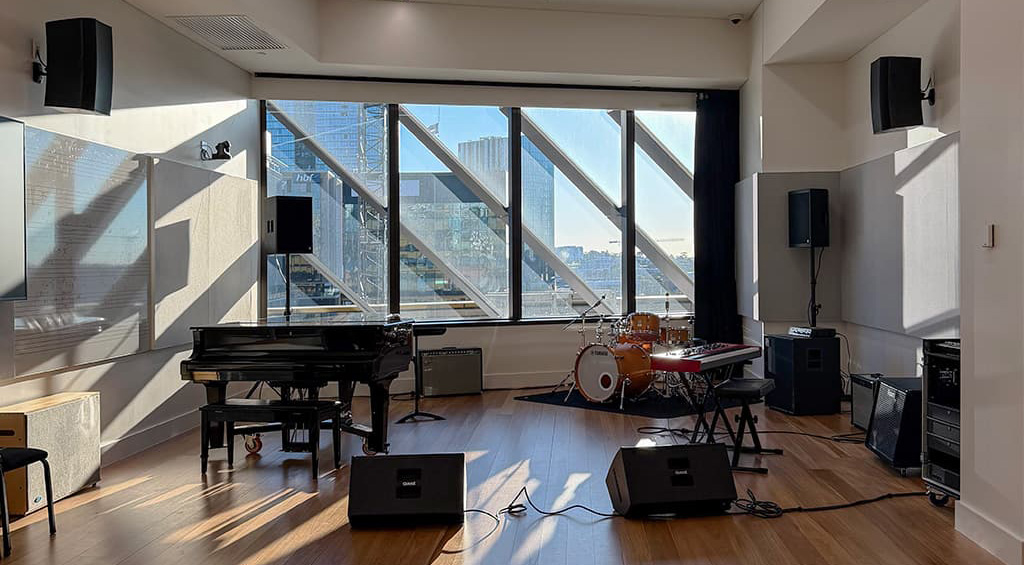
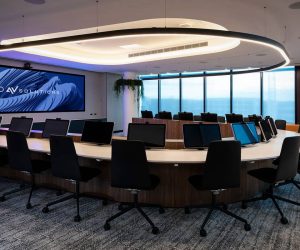
One of the rehearsal spaces, equipped with a PA, Riedel MediorNet to link to any recording/mix space, a Q-SYS PTZ cam to assist with streaming and/or assessment and an outstanding view of Perth.
COLLABORATION ACROSS DISCIPLINES
The vertical campus and shared infrastructure have unlocked cross-faculty collaboration that was difficult on the old site. Screen students can support broadcast productions; performance students can record in Atmos rooms; media students can stage multi-level outside broadcasts during open days.
Andrea Burns, Academic Lead of Screen and Media, describes the impact: “In most universities you have siloed arrangements for media, screen and performance. Here we can work across all of them at a high level. Students feel like they’re learning at NASA! Industry visitors have told us our equipment is two generations ahead of what they have. Undergraduate journalism numbers have tripled in a year. People are coming back to university because they know they won’t get this exposure in any newsroom in the country.”
Cathy Henkel, Associate Professor and course coordinator of the postgraduate screen production programme, echoes the sentiment: “We have a boutique post-production facility that is one of the best in Western Australia, in fact, some rooms are the only ones of their kind in the state. Applicants of all ages are coming because they are serious about entering the industry. The facilities replicate, and in some cases exceed, professional standards so graduates leave completely set-ready.”
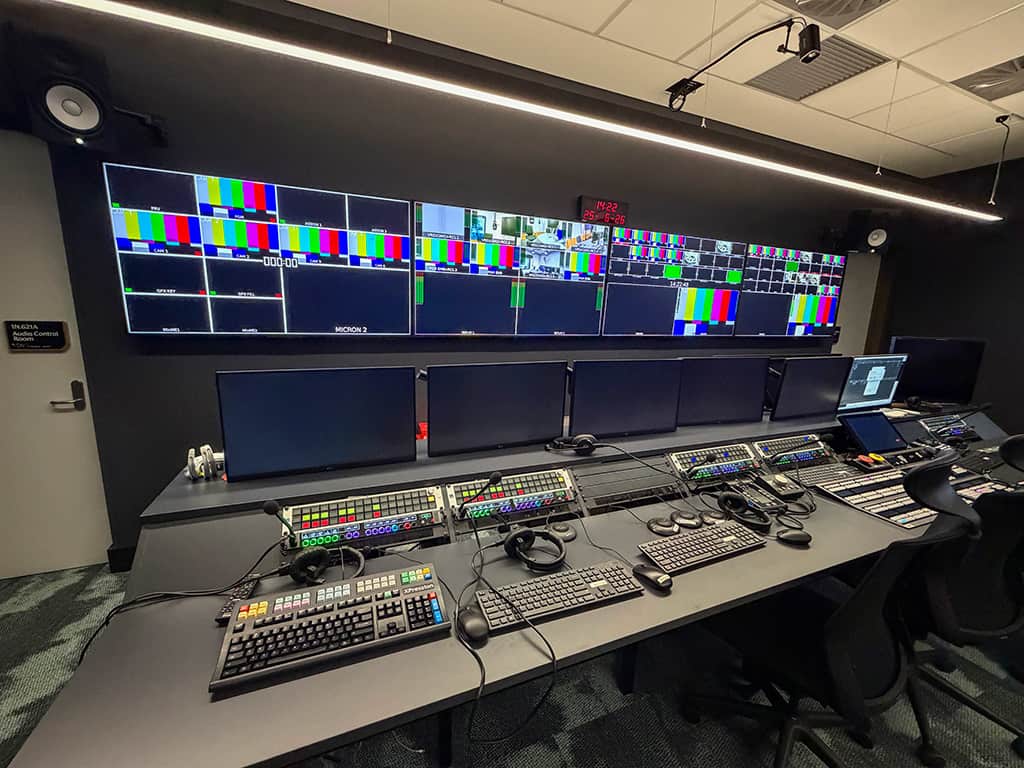
WAAPA’s broadcast studio is the envy of the industry. “Visitors have told us our equipment is two generations ahead of what they have.”
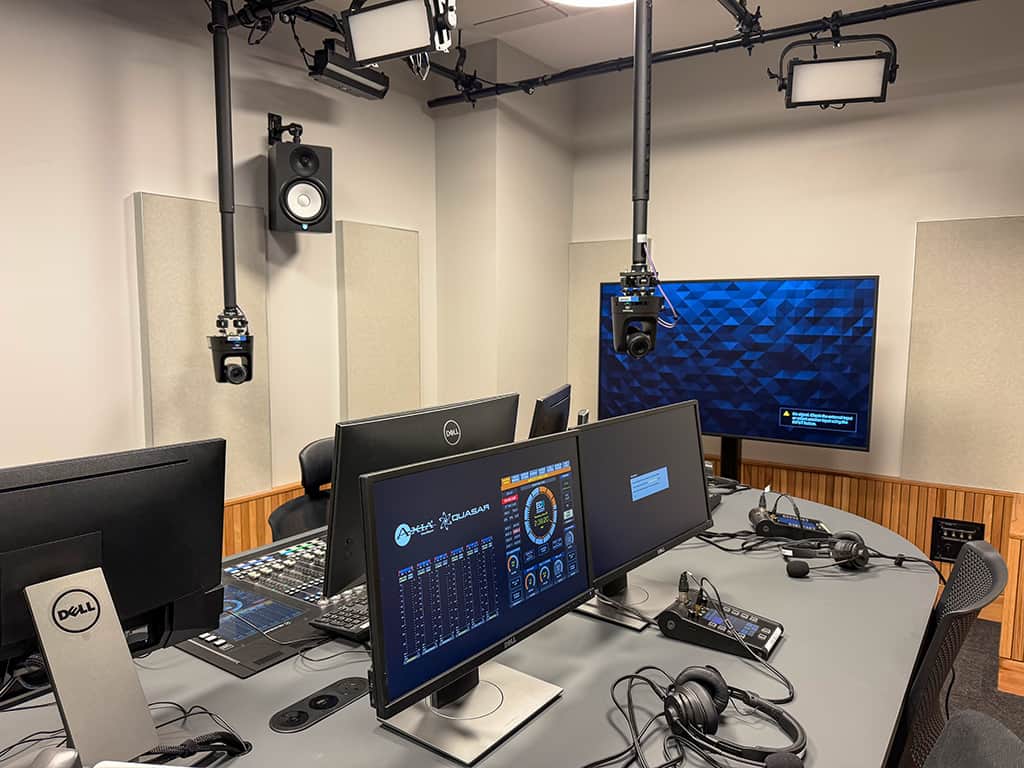
One of the two state-of-the-art radio/podcast studios.

SCALE & TEAMWORK
Delivering this level of capability required extraordinary coordination. Diversified peaked at around 70 people on the job. The numbers are eye watering: 320 kilometres of infrastructure cabling, 676 speakers installed, more than 50,000 install hours and 8000 commissioning hours.
Factory acceptance testing of the entire broadcast environment a year before installation proved decisive. “We built the whole broadcast facility in our warehouse, validated it with the users and the builder, and signed it off well before we had to build it on site,” Curtois recalls. “That saved a huge amount of time given the project compression.”
Proud reflects on the wider collaboration: “From the beginning right through to the end it has been a great team effort: ECU and WAAPA staff, Charcoalblue, the architects, Multiplex, Diversified and the other contractors. Five years from start to finish is a huge accomplishment and it wouldn’t have happened if everyone hadn’t worked as a team.”
READY FOR THE NEXT GEN
The result is more than a collection of desirable rooms. It is a living, interconnected platform designed to evolve with teaching and industry practice. Students leave having worked on the same tools, workflows and communication systems they will encounter professionally. Staff can reconfigure spaces for assessment, collaboration or public performance with a flexibility that the old campus could never match.
As Russell Proud puts it: “With this investment and the new way of working, WAAPA could easily become a leader across the world in arts education.”
For a generation of performers, technicians, filmmakers and journalists, the vertical campus is already proving that the best creative education happens when the technology itself becomes invisible, quietly connecting every stage, studio and edit suite into one coherent whole.
Charcoalblue: charcoalblue.com
Diversified: onediversified.com
Edith Cowan University: ecu.edu.au









RESPONSES