
AV Case Study: New Zealand International Convention Centre AV Control & Media Transport
New Zealand is now on the international convention and conferencing map. It’s an innovative site which required an innovative AV solution.

17 April 2026
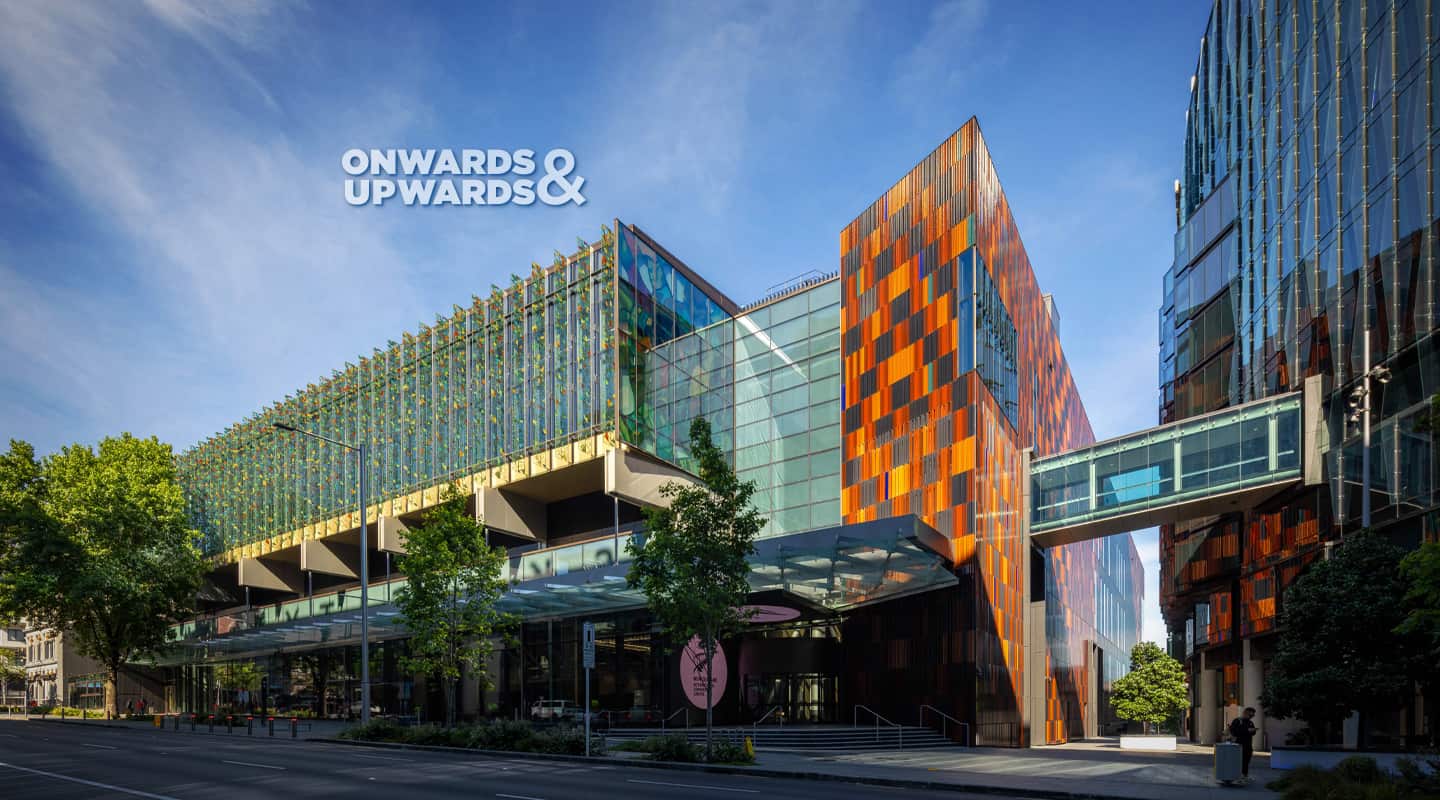
‘Onwards and upwards’ is a fitting (if unofficial) motto for the New Zealand International Convention Centre. It’s been through a lot and it’s come out the other side. ‘Upwards’ is an especially good descriptor. Not only for its ‘don’t look back’ ethos but for its architectural posture. Unusually for a convention/conference centre, NZICC uses a stacked approach – five floors of prime space in downtown Auckland in the Sky City precinct.
No one wants to dwell on the fire – ‘onwards and upwards!’ – but it’s a significant player in the NZICC story. Not long into the interior fitout, a workplace mishap led to a catastrophic full-site conflagration. As is often the case, it’s the millions of litres of water used to put the fire out that’s just as destructive as the fire itself. The site had to be stripped back to bare bones.
At this point Vega Global NZ had fully mobilised and onboarded its NZICC team, ready for an 18-month campaign of AV installation and integration. When disaster struck, one week in, it had to take the agonising but necessary steps to demobilise most of its team and stand by for further instructions.
Frustrating, sure, but the change from an 18-month to a five-year timeline wasn’t all bad…
ANYTHING, ANYWHERE
When Vega Global NZ answered the ‘anything to anywhere’ brief from the client it took a leap of faith with Crestron to go all-in on its brand new DM NVX AV-over-IP platform. With some 350 end points it was to be one of the most ambitious DM NVX rollouts to that point in time.
“That was the original brief — anything to anywhere, at any time,” says Crestron’s Ben Fraser. DM NVX’s encoder and decoders, self-identification and multicast capabilities made that feasible in a stacked, multi‑level convention centre where HDBaseT simply wouldn’t cope. “Given the distance and topography, fibre was the only way to guarantee high‑quality delivery,” Ben adds.
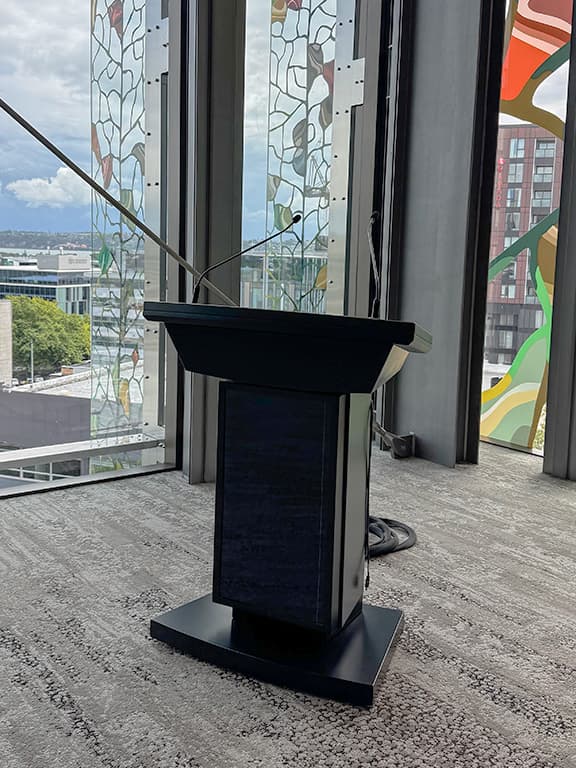
Fibre did more than provide bandwidth, it unlocked the operational model. Vega’s Stephen Ward describes the payoff: “You can roll in a mobile rack or a lectern, plug it in, and it immediately knows where it is and what features are available. Because it’s part of the Crestron ecosystem, the endpoints talk to the processors, the switches and everything just moves seamlessly.”
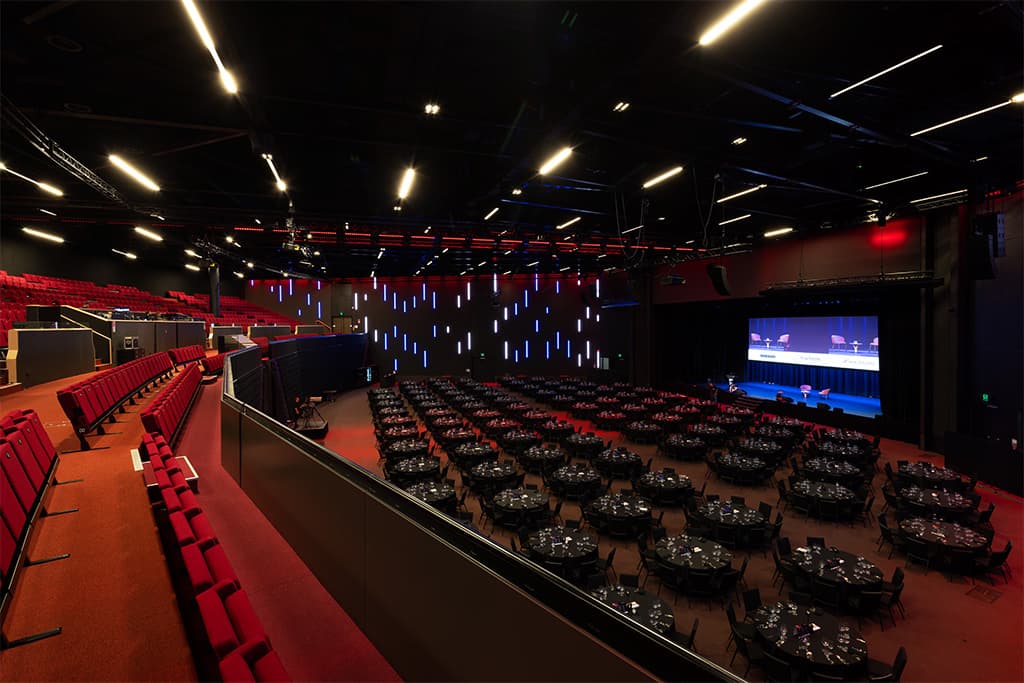
That self‑discovery isn’t a ‘nice to have’ convenience; it’s what makes the fast turnarounds and multi-use applications possible. NZICC’s Technology Services Manager, Ryan Göllner, sums it up: “One night we might run a full‑on concert – where we’ll deploy the JBL VTX rig, select ‘performance’ on the panel and all the DSP presets for the room apply straight away. Then the next morning we can have a tight turnaround to a ‘lav and lectern’ conference and that automation can save us hours.”
CONTROL & LOGIC
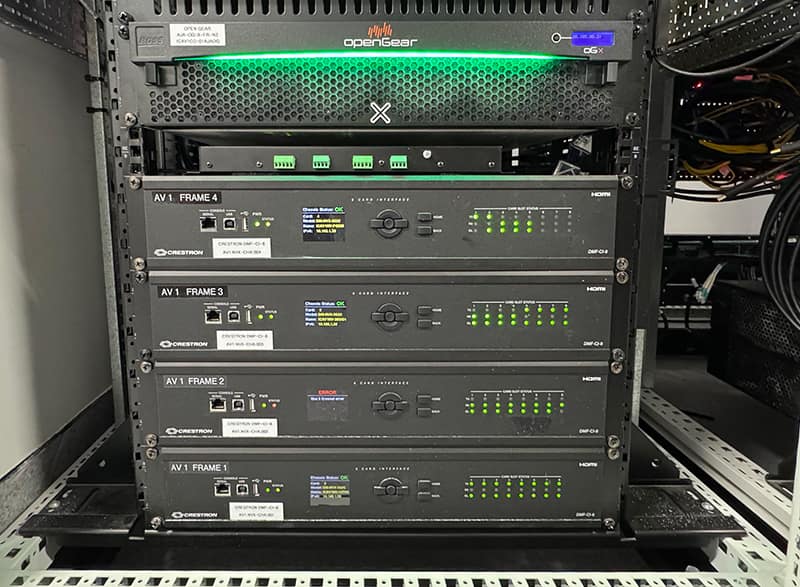
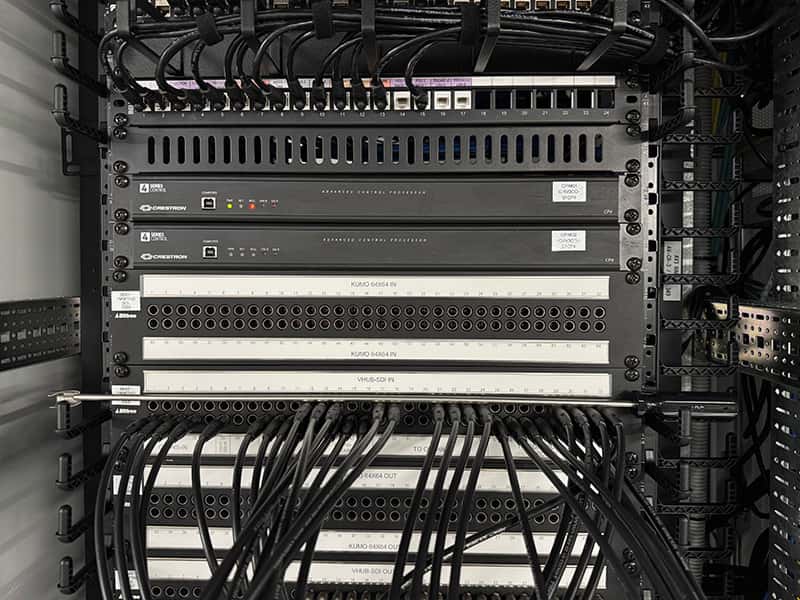
With DM NVX, Crestron isn’t just the AV transport vendor – its processors and control ecosystem are the building’s operational brain. Vega deployed 16 Crestron CP4 processors to provide redundancy and predictable sequencing. “We optimised them so that when you press a button on a touch panel those logical steps run in the right order,” Ward explains. Ben places that choice in context: “Prior to 2020, redundancy and ‘high availability’ were mostly network ideas, not control ideas, so multiple control processors were the practical way to achieve it”.
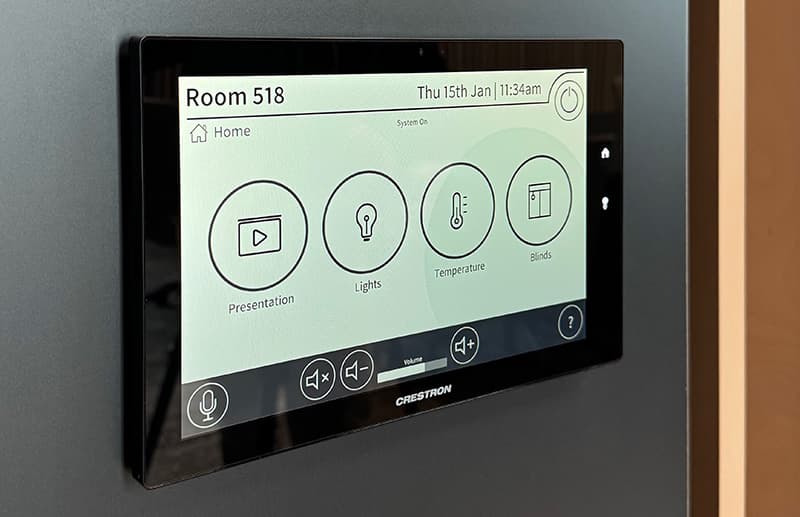
That sophistication translates into operational simplicity. Crestron touch panels give immediate, tiered access for operators and non‑technical staff: “The in-room touch panels are dead simple, and you can tier up the control, say, to the stage management consoles or into control rooms with specialist modules for whole‑building control,” Ryan says. Ben adds: “Crestron acts as the control ‘umbrella’ to the likes of the Dynalite lighting or aspects of the air conditioning – with over 50 years in the industry we solve problems at a speed and depth others can’t match.”
MONITORING
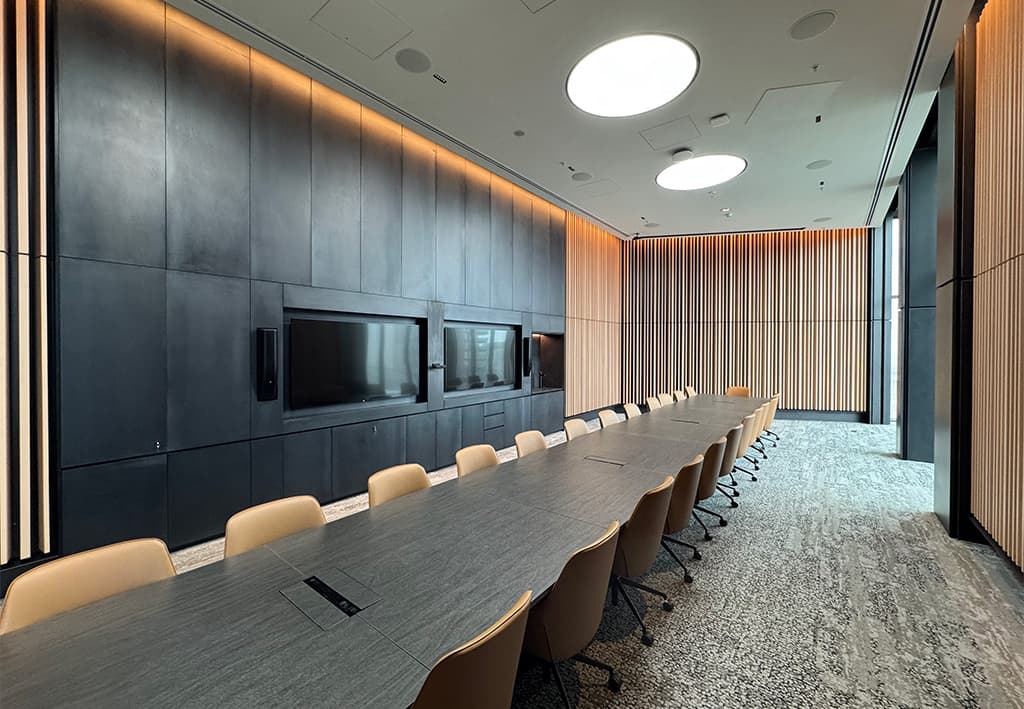
Monitoring and device‑level metrics run through Crestron Fusion (and, where appropriate, XiO Cloud tools). “Fusion is a programmed monitoring and management tool,” Ben explains. “It needs the programming strings in the control processors to actually see devices.” In practice that means Fusion isn’t only checking whether a display is on; programmed strings interrogate device health, power states, projector lamp hours, lighting presets and environmental integration. “We built it for visibility,” Ben says — essential for a venue that must demonstrate uptime, sustainability and operational predictability to international clients. Ryan adds the practical benefit: “It lets us audit device power usage and helps to inform future purchases — that’s really valuable for the tech team.”
REFINED CODE
With more (enforced) time on their hands, Vega were able to really refine the code – the kind of polish that makes the system invisible to users. The longer gestation allowed Vega to really nail down boot sequencing, failover logic and endpoint auto‑provisioning until the control system’s behaviour felt effortless. “Self‑discovery really works: you roll in, plug in, and the system finds the network, the location and the associated equipment and aligns everything quickly,” Ward says. “Speed was key – refined code and systematic boot sequencing: the network switch boots up first, with the local processors coming on line while you wait, then fully connect.”
That sequencing makes lecterns and mobile racks truly auto‑configuring and resettable: plug in, identify, apply presets and then return to a known neutral state when removed. Logan Bent, Vega’s lead Crestron programmer, is credited with much of that polish. Ward says: “Logan Bent – I’ve known him for over 20 years; he’s a highly experienced Crestron programmer; understated but brilliant. This project really let him shine.” Logan worked alongside Jonathan Pollock on audio integration, and together they ran testbeds off‑site during the hiatus. The result was mature, dependable code: consistent boot order, reliable dependency management across processors and clean resettability so operators can recover a room quickly or swap rigs without needing a specialist.
RESETTABILITY
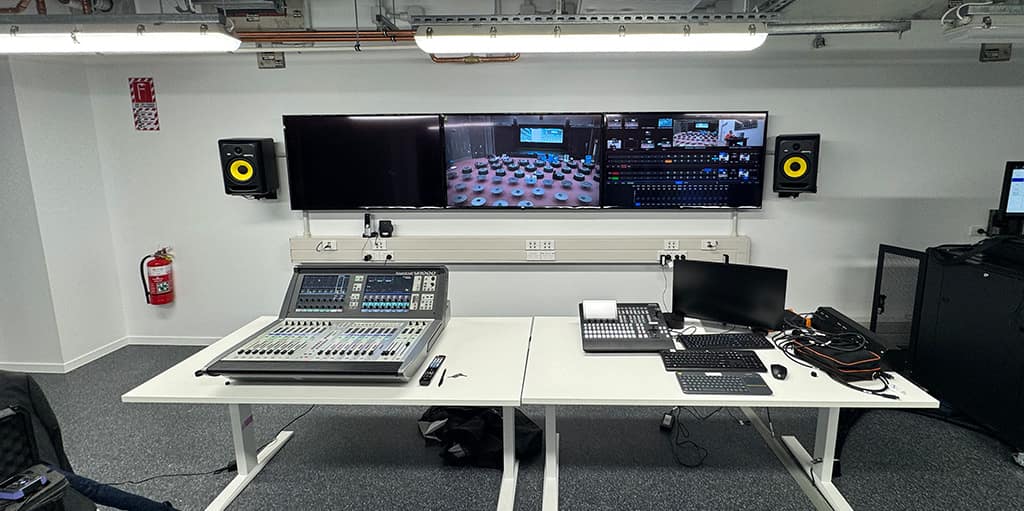
Resettability keeps coming up in user feedback. Vega engineered the rooms and mobile elements so they can be reassigned rapidly, with Crestron orchestrating linked functions – AV routing, DSP presets, lighting cues, blinds and a/c actions – as cohesive room modes. Ryan highlights the staffing advantage: “It’s minimal finger‑touch operation and instantly understandable to a layperson. That’s huge for our support team – anyone in a control room, even if they’ve never been there before, can operate it.” That predictability reduces the need for specialist intervention and shifts support to internal ICT teams, with Vega and preferred vendors handling things when they escalate.
Taken together, DM NVX over fibre, Crestron control and Fusion monitoring let the NZICC behave as a single, serviceable system rather than a siloed collection of rooms. “This venue rode the crest of AV over IP coming together,” Ryan reflects, and Ben concludes: “It’s a major flagship for New Zealand – probably the largest deployment of its kind under one roof.” For operators and event producers that means confidence: plug in, select a mode, and the building executes.
LOCAL HERO
NZICC is a local success story. It’s a convention centre done differently and with real innovation. Vega represented the only all-Kiwi tender, and the project was a real stretch at the time.
“We were the only NZ company taking on the entire project’s AV, end-to-end. It was daunting but the team has done amazingly well.
“Having a solid partnership with a vendor like Crestron certainly gave Vega confidence going in. Crestron backed us to the hilt, they joined us on the journey and rode the bumps with us.”
Vega NZ Global: vega-global.co.nz
Crestron: crestron.com






RESPONSES