
AV Case Study: The Gordon TAFE Culinary Academy
The Gordon and MultiTek Solutions whisk the cooking class into the digital age.

24 June 2026
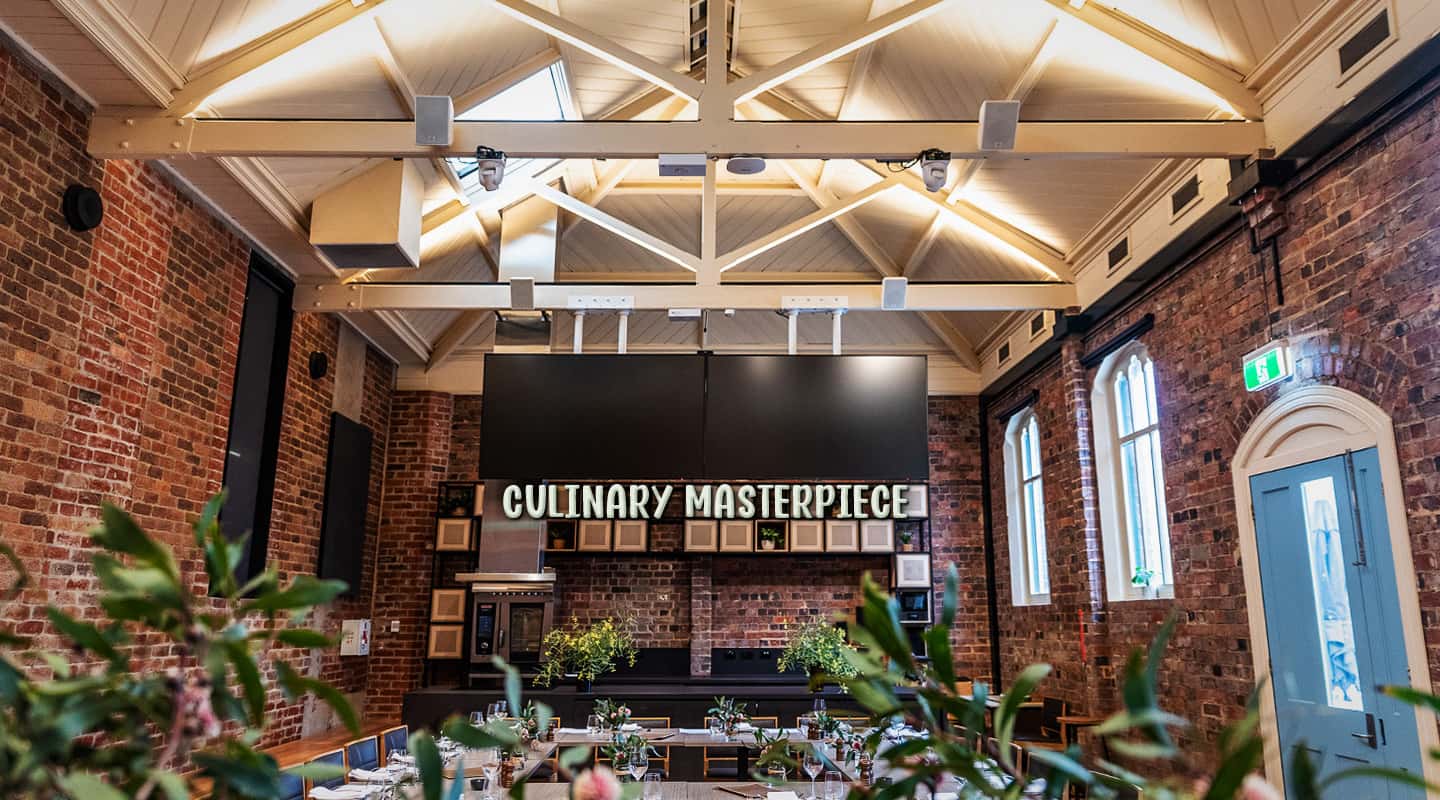
‘Hands-on learning’ doesn’t get much more hands-on than when training to be a chef, a baker or a barista. You can’t get Chat GPT to phone in your homework when the task is to produce a lump-free béchamel sauce or a silky latté. But when it comes to teaching a room full of would-be chefs, one bottleneck is how many students you can fit around a prep bench or cooktop to show how it’s done. The Gordon Institute of TAFE in Geelong has radically upgraded its Culinary Academy and the new audiovisual package addresses this challenge (and many others) by leveraging the latest in education and presentation technologies.
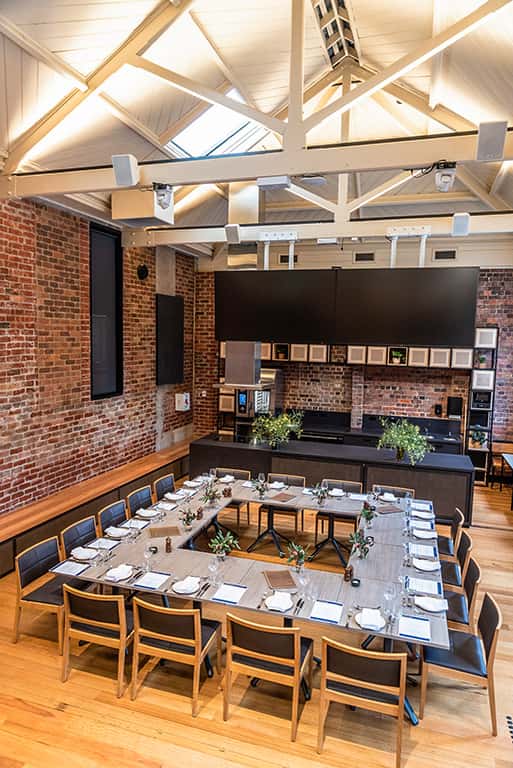
“It’s changing the way we teach to create better chefs,” explains IT Manager David Ovenden. “Previously, all the students were necessarily clustered around the front of the room where the teacher would be preparing food. Now everyone can have their own workstation and, thanks to the AV, they can all see and hear the demonstration clearly, then replicate what they see. It’s a much more professional setting and much more efficient way of learning.”
KITCHEN CONFIDENTIAL
The AV design was devised by ADP Consulting, with Geelong-based systems integrator MultiTek Solutions taking care of the integration and installation, led by Managing Director Shane Haugh.
“We’ve had a long-standing 20-year relationship with The Gordon and it was good to get on board early,” says Shane. “We knew it would be a long haul, what with the heritage overlay and the need to keep the faculty operating during the upgrade.”
AV-OVER-IP ON THE MENU
Flexibility was the overriding requirement. Content from the show kitchen needed to spill effortlessly into unit kitchens, with overflow viewing and multiple source types — cameras, recipe laptops, close-up shots of knife work — all needing to be available anywhere in the facility.
Crestron NVX AV-over-IP became the backbone. While Crestron DM had been used across the campus for years, this was the first large-scale NVX rollout at The Gordon. “It was the obvious choice for future-proofing,” explains Shane Haugh. “We didn’t know exactly what might be added later, but NVX gave us the scalability we needed without ripping everything out again.”
The system handles a wide variety of inputs without compromise on quality, thanks to NVX’s Pixel Perfect Processing — sub-frame latency and no loss of colour accuracy, which is critical when students are learning to judge the perfect sear or the right shade of caramel.
“”
It’s expanded our reach. Students feel more connected, they stay engaged, and we’re not stretching ourselves trying to make sure everyone can see
CONTROL: FLOUR POWER INTERFACE
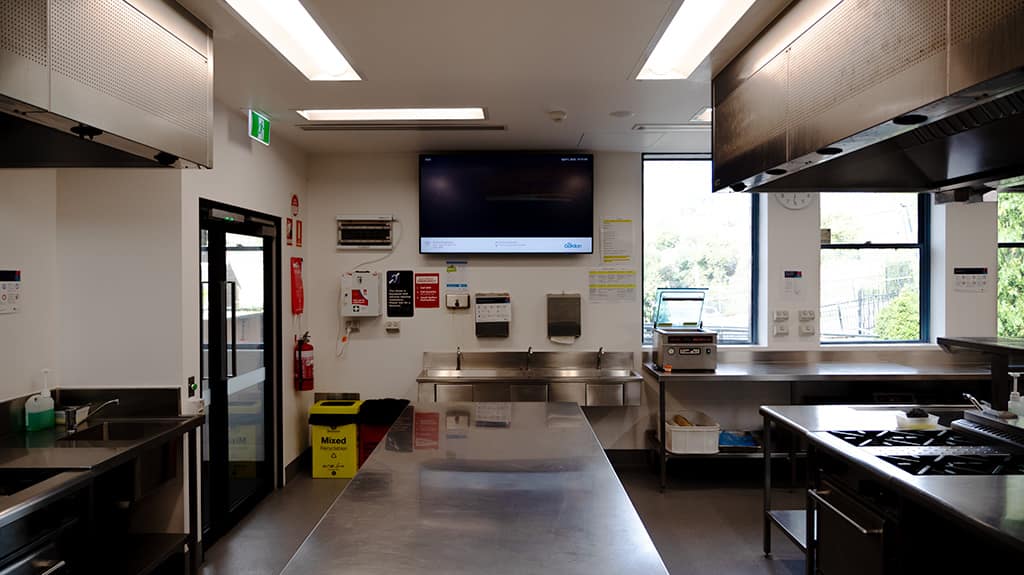
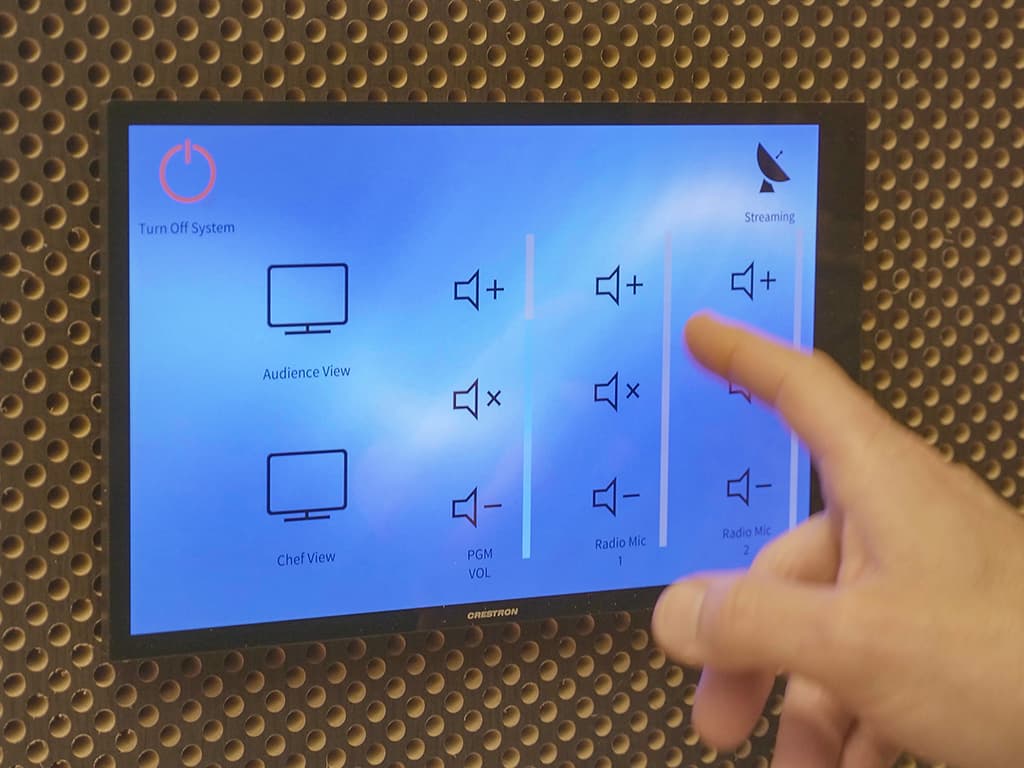
In a working kitchen, teachers are focused on practical demonstration, not AV operation. The solution had to be intuitive enough for someone with flour on their hands (or worse) to operate with a single clean pinky.
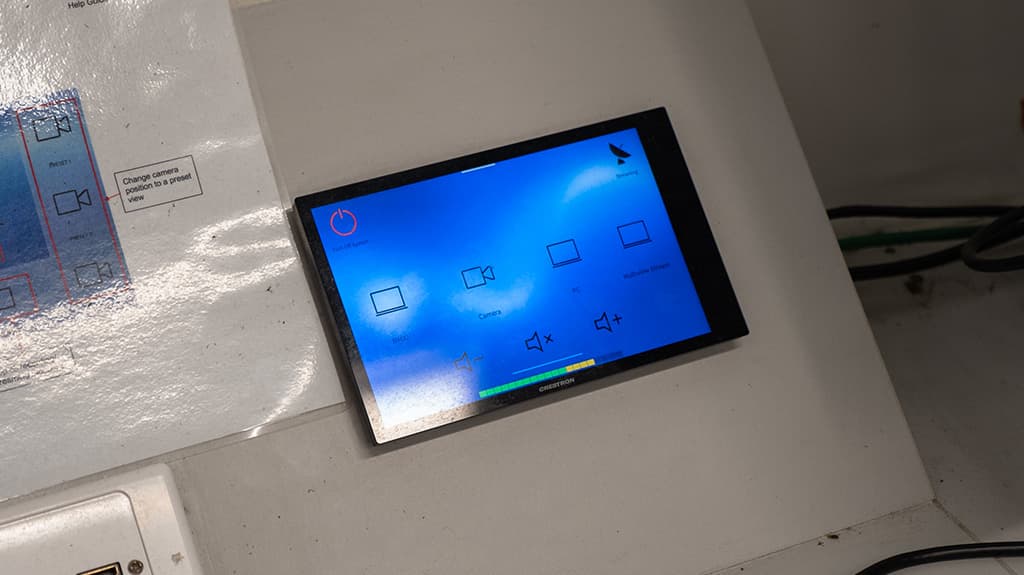
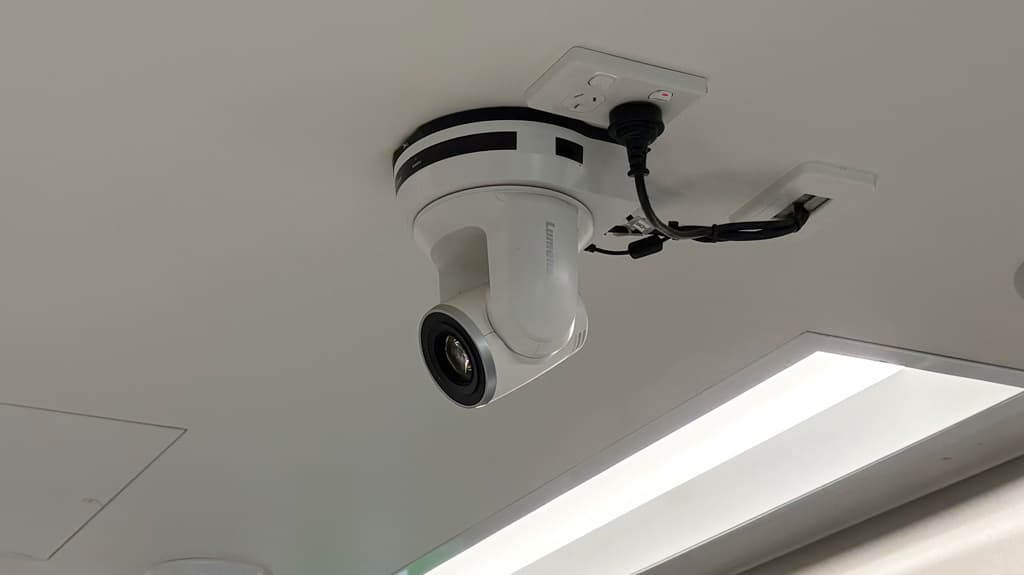
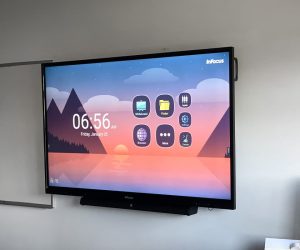
Crestron touchscreens are deployed throughout, with carefully designed interfaces featuring large, simple presets. Teachers can instantly recall views of the cooktop, prep bench or workbench, then fine-tune the Lumens cameras’ pan-tilt-zoom when needed.
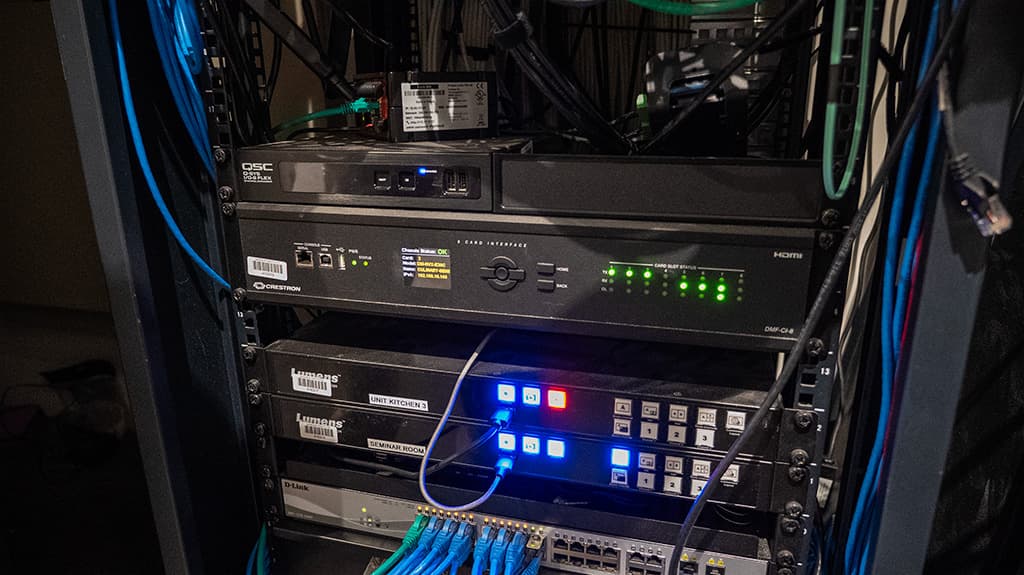
All the heavy lifting – PCs, processing and rack gear – lives outside the kitchens in centralised racks, with USB, video and control extended cleanly into the rooms. The result is a clean, durable workspace with zero risk of expensive gear meeting rogue splashes of hollandaise.
LECTURE CAPTURE: RECIPE FOR SUCCESS
Lumens LC-200 devices sit at the heart of the lecture capture system. Each unit is an all-in-one hub that records to its internal drive, accepts multiple inputs, and creates both composite multi-view recordings and individual ISO files.
Students who miss a class, want to review a technique, or simply need to revisit a demonstration can access the content online. The marketing department can also pull wide shots for promotional use, while teachers use the recordings for self-reflection.
“The beauty of the LC-200 is that it does it all at once,” notes Shane. “One split-screen for the students, plus clean ISO feeds for whoever needs them.”
STREAMING & HYBRID: SIMMERING REMOTELY
Several spaces support live streaming direct to YouTube for the show kitchens, while others are configured for hybrid learning via Microsoft Teams. Crestron Flex Kits provide one-touch join, feeding far-end participants the full multi-view output from the LC-200 – recipe, close-ups, wide shot and presenter – plus two-way audio so remote students can still ask questions and feel part of the class.
A clever piece of system design makes this even smoother. The Lumens LC-200 accepts an RTSP stream from the PTZ cameras over the network. This frees up the HDMI output for the in-room NVX decoder, allowing the same camera feeds to be used simultaneously for both lecture capture/recording and local presentation without any signal juggling or additional converters. Shane Haugh notes the integration advantage: “It gives us a lot of flexibility – native PTZ control through the Lumens web director when needed, full external Crestron control, and clean HDMI for the room displays.”
Shane sums it up neatly: “It’s that fine balance – a complex system on the inside, but dead simple on the front end.”
AUDIO: WHISK MANAGEMENT
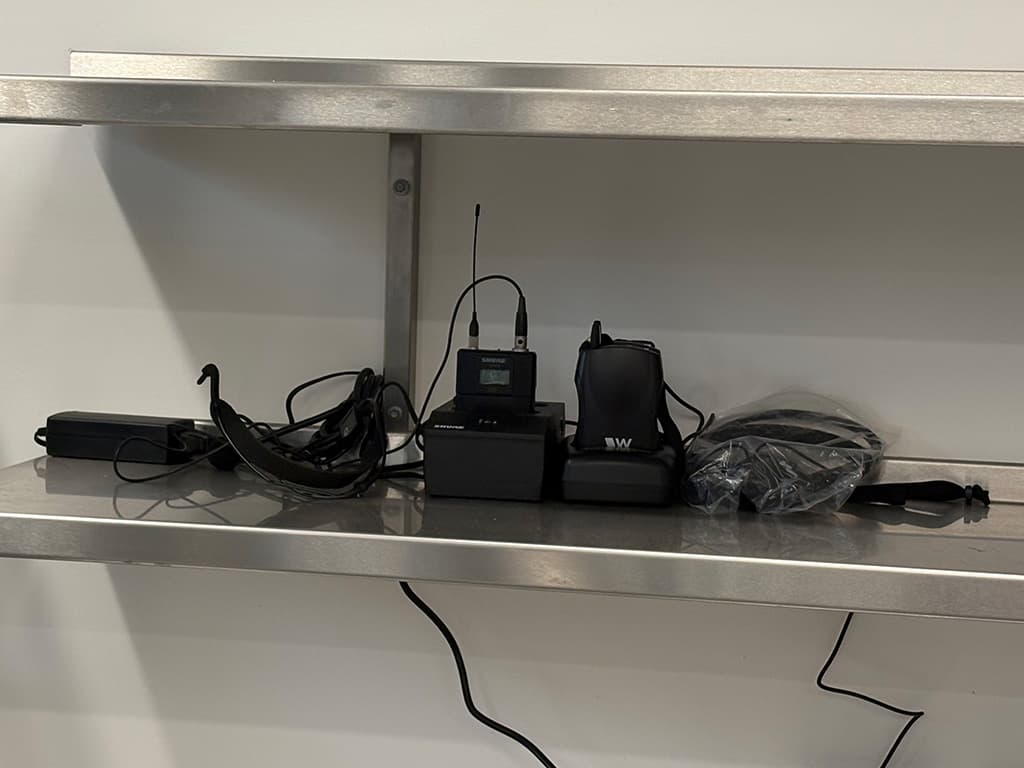
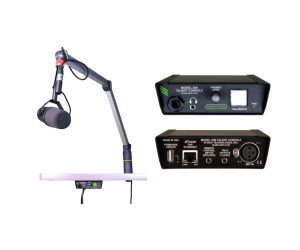
Kitchens are noisy – blenders, extraction fans, pots ’n’ pans… Q-SYS handles all audio distribution with its DSP split across three locations for both operational flexibility and redundancy. Voice reinforcement (via Shure ULX-D wireless and headsets) ensures every student can hear clearly even at the back of a long bakery classroom, while a highly directional ceiling mic serves as backup for lecture capture, delivering a warmer, cleaner tone for recordings and streams.
The same audio stream is tuned differently in Q-SYS depending on its destination — crisp and present for in-room reinforcement, or more natural for online consumption.
PROOF IS IN THE PUDDING
From the lecturer’s perspective, the change has been transformative.
Andrew Percy, a lecturer at The Gordon, puts it simply: “It’s expanded our reach. Students feel more connected, they stay engaged, and we’re not stretching ourselves trying to make sure everyone can see. Visual learners especially love it – and these days, kids like screens.”
Guest chefs such as Matt Preston and Adrian Richardson have also benefited. Dynamic demonstrations that once would have left half the room craning their necks are now perfectly visible to everyone.
For MultiTek Solutions, seeing the system in daily use months and years later remains the best validation.
“Walking around and watching it in action is really satisfying,” smiles Shane Haugh. “It feels like we’ve really nailed the brief.”
In a heritage-listed culinary academy, MultiTek has delivered a system that’s equal parts robust, flexible and remarkably easy to live with – proving that even in the heat of the kitchen, good AV can still be the secret ingredient.
MultiTek Solutions: multiteksolutions.com.au
Crestron: crestron.com
Corsair Solutions (Lumens): corsairsolutions.com.au
TAG (Q-SYS): tag.com.au





RESPONSES