
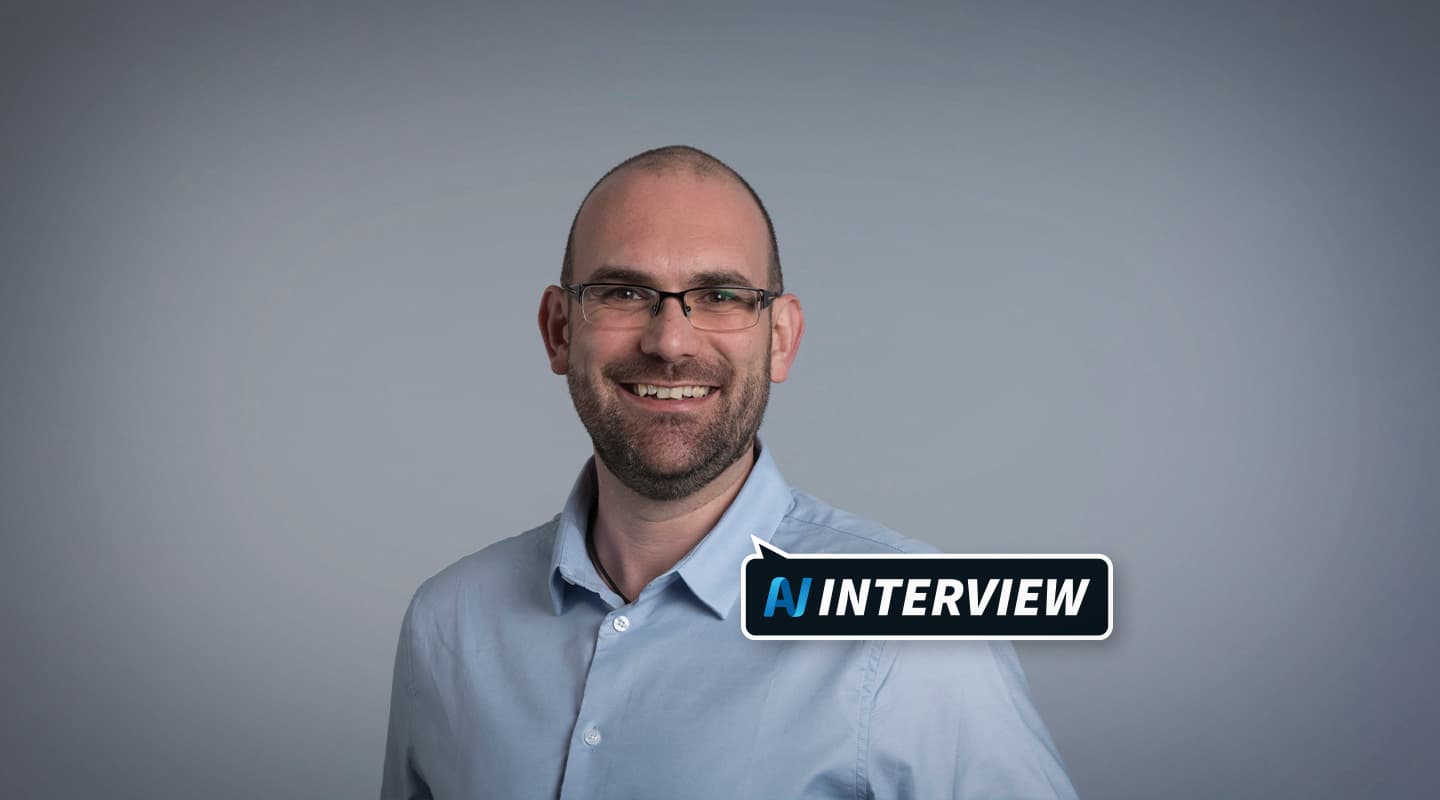
AV Interview: Andrew Davies, Meyer Sound
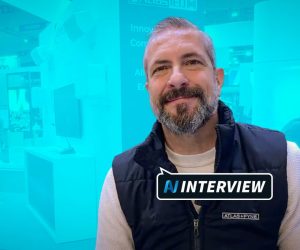
Andy is Senior Director of Product Management, Meyer Sound. We caught up with him at ISE 2026 to hear about the soon-to-be-released Tigra.

20 February 2026
Meyer Sound’s Tigra system was one of the headline product debuts at ISE 2026. Tigra is designed to bring the sonic performance and flexibility that has made Panther a runaway success into a broader range of applications. AV Technology caught up with Meyer Sound’s Andy Davies to dig deeper into the thinking behind the product, the key technologies involved, and when the industry will finally get to hear it for themselves.
AV.technology: Let’s start with the Tigra pitch. What’s the big idea?
Andy Davies: The point of Tigra really comes out of the success we’ve had with Panther and the feedback from our users – all the things that have made Panther our best-selling large-format line array in just over three years. Users love the way Panther sounds and the flexibility it offers, but not everyone does stadium-scale events. Panther already scales from theatre shows — like The Last Ship in Amsterdam – to stadium runs like Ed Sheeran’s current tour. It’s versatile, but there’s a huge segment of the market that sits below that scale.
With Tigra we want to bring that high level of performance into a scale suited to small-to-mid-sized theatres, ballrooms and arenas, giving people that same experience in the spaces where the majority of live performance work happens.
AV.technology: So it’s suitable for ‘most jobs, most of the time’?
Andy Davies: Exactly. It lives right where most of the industry works: from a couple of hundred people up to a few thousand, with all the variance in venue size and shape that comes with that. We wanted something truly versatile and flexible that still delivers on the self-powered performance promise that really captured people’s imagination with Panther.
TECH PLATFORM
AV.technology: Panther had some serious technological achievements — pattern control… all that SPL and performance from a relatively compact enclosure. How has Tigra benefited from another three years of R&D?
Andy Davies: First, thanks for the kind words about Panther – that means a lot. The technology behind Panther has continued to evolve, and with this whole generation of products – including our Ultra Series – we’re really delivering on the self-powered promise. Because we develop our drivers and amplifiers together, the teams work in tandem, and that gives us decades of refinement to tap into. We’re constantly pushing performance out of the size of the loudspeaker, and it doesn’t happen by standing still.
For Tigra we’ve introduced a new generation of amplifiers and drivers, and we’ve borrowed materials and design insights from products like the Ultra X80’s high-frequency driver. On every new design we ask not just “how do we do this better?” but “what new materials, what new ways of building these components will give us maximum efficiency?” That’s what captured people’s imagination with Panther, and that same philosophy is at the core of Tigra.
AV.technology: People traditionally associate Meyer Sound with ‘heavy boxes’. How does that perception fit with Tigra?
Andy Davies: That perception goes way back to products like the UPA. Everyone knew a UPA could go incredibly loud for its size, but it was heavy. Thirty years on, that core efficiency – loud, clean, reliable – stays, but we’ve driven down weight through advances in amplifier tech, driver design, cabinet engineering and new materials in components. When you put our self-powered products side-by-side with non-powered alternatives, we come out lighter and often simpler to deploy – which is exactly what the engineers have been working toward.
AV.technology: And as a complete system, tell us about the subs that support Tigra.
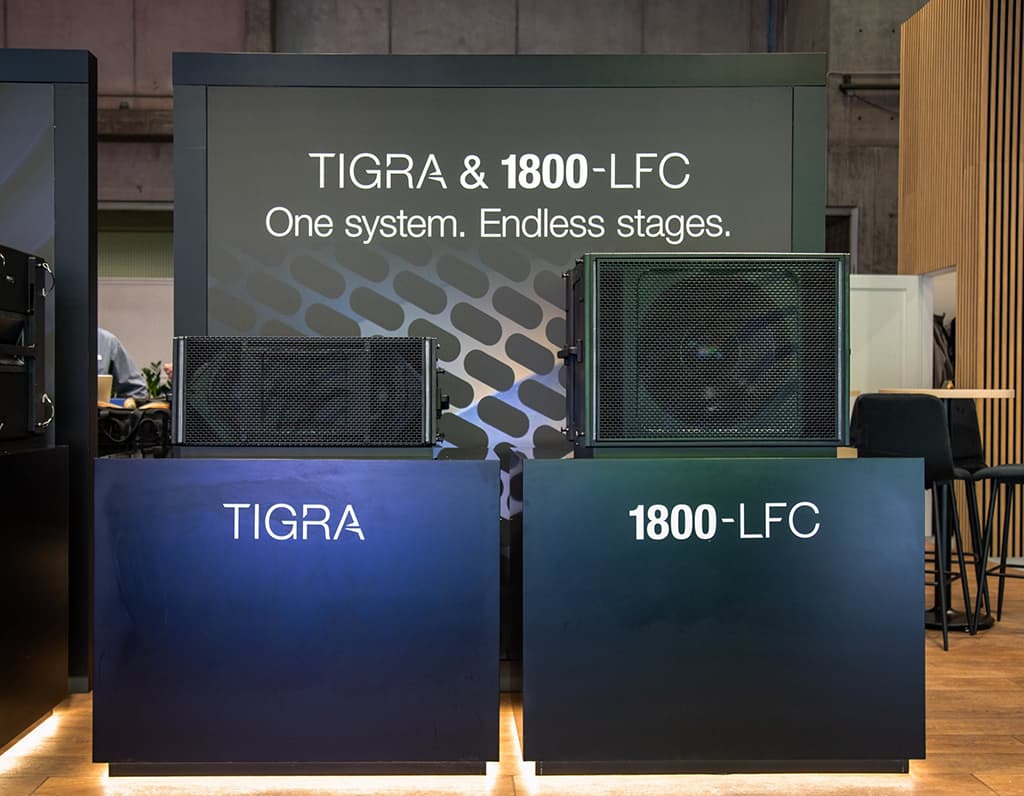
Andy Davies: Subs are absolutely key. The new 1800-LFC is sized to match Tigra perfectly – you can fly it or ground-stack it with Tigra arrays, giving users real deployment flexibility. But more importantly, we’ve built a family that’s meant to work together seamlessly: Tigra’s frequency response is matched to Panther, but at a lower SPL, and the 1800-LFC matches up with the 2100-LFC at a similar relative tuning and performance level. That creates a cohesive, plug-and-play family where you can mix systems with confidence – whether it’s Tigra with 2100-LFCs or Panther with 1800-LFCs – with no sonic compromises.
AV.technology: Finally, you’re not demoing Tigra here at the show. When will people actually get to hear it?
Andy Davies: We’ve got pre-production prototypes here and a list of things we already know will change before launch thanks to customer feedback. The formal launch is planned for March, and demos start in April, first in the U.S. Then as the year goes on we’ll roll out demos worldwide. Dealers and distributors at ISE are already talking about their own local events later in the year. Tigra ships in May, and we’ve already got some great opportunities lined up where it’ll show up on festivals and events through the summer. So later this year people will finally hear it in the real world and see what all the excitement’s about.
Meyer Sound: meyersound.com.au





RESPONSES