
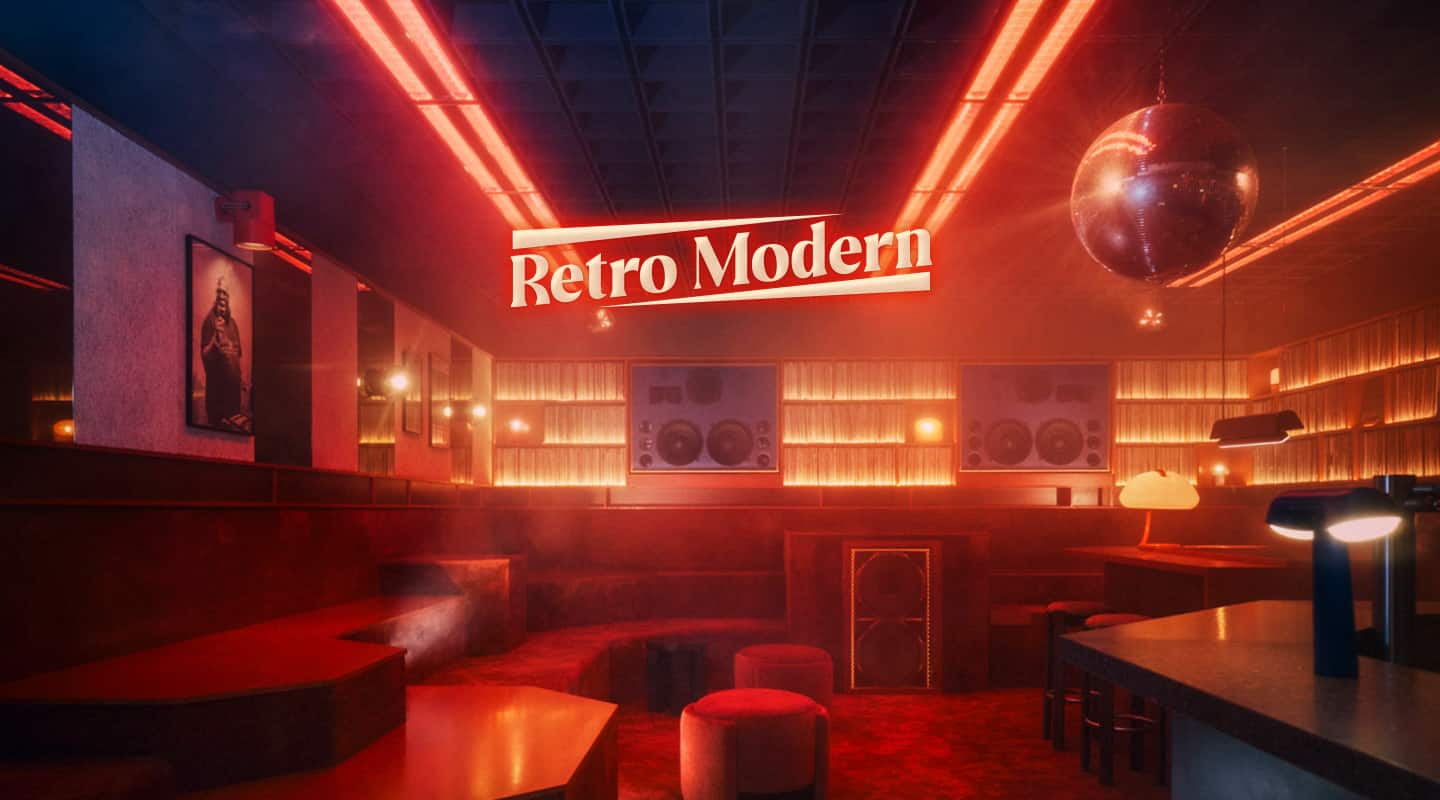
AV Case Study: LB’s Record Bar
In LB’s Record Bar, the 1970s never sounded this good.

22 December 2025
Record bars and music lounges are on the rise. Good thing too. For a generation that’s only known streamed music, a record bar represents something novel and authentic – music on a format you can touch and feel that’s designed to be listened to and appreciated.
The current crop of record bars are generally decked out in nostalgic interior design with retro fittings. Often this extends to the loudspeaker system, helping to convey that ’70s ‘sunken lounge’ feel.
Technical Audio Group’s Technical Director, Anthony Russo, has been helping venues and installers on a number of record bar concepts, such as the Caterpillar Club in Martin Place and Curtains Jazz Club (when it’s not hosting live music), and is bemused when he sees some operators reintroducing old-school hi-fi equipment into commercial venues.
“I ask them: ‘you’re building this cool bar with all this cool furniture and retro aesthetic – it looks amazing. So would you buy a refrigerator from 1965 to put your beer in, because it looks cool? ‘No, that’d be stupid.’ ‘Exactly, so why are you buying speakers from 1969 to put in a commercial environment?!’
Anthony makes a good point. One that might be obvious to those reading this article. But what’s the alternative if you want to make a feature of the loudspeakers?’
ORANGE: LIKE CLOCKWORK
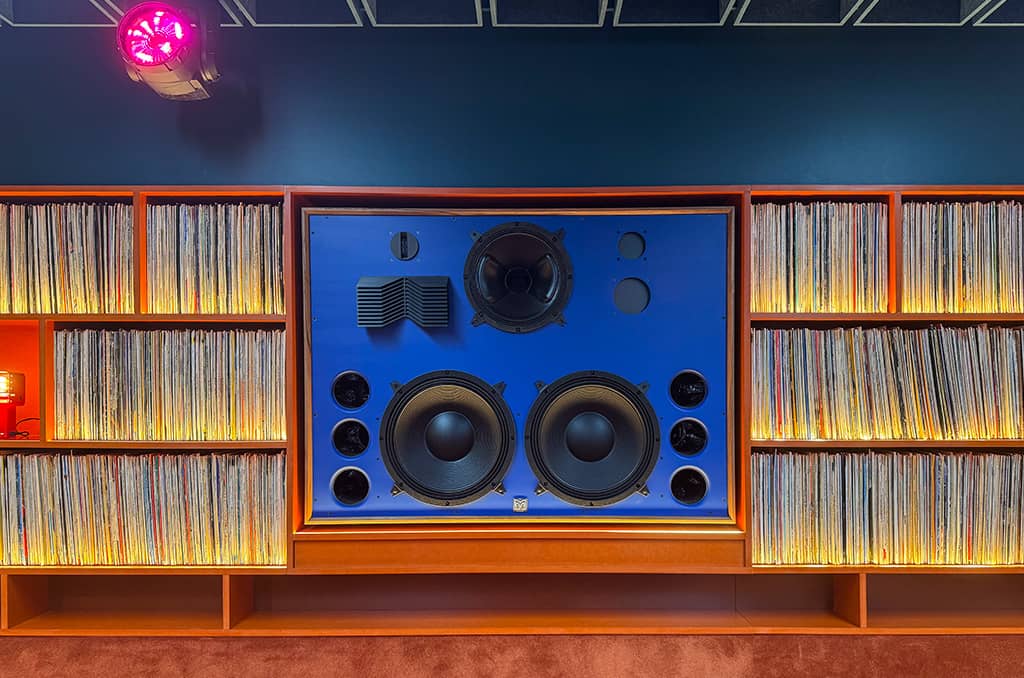
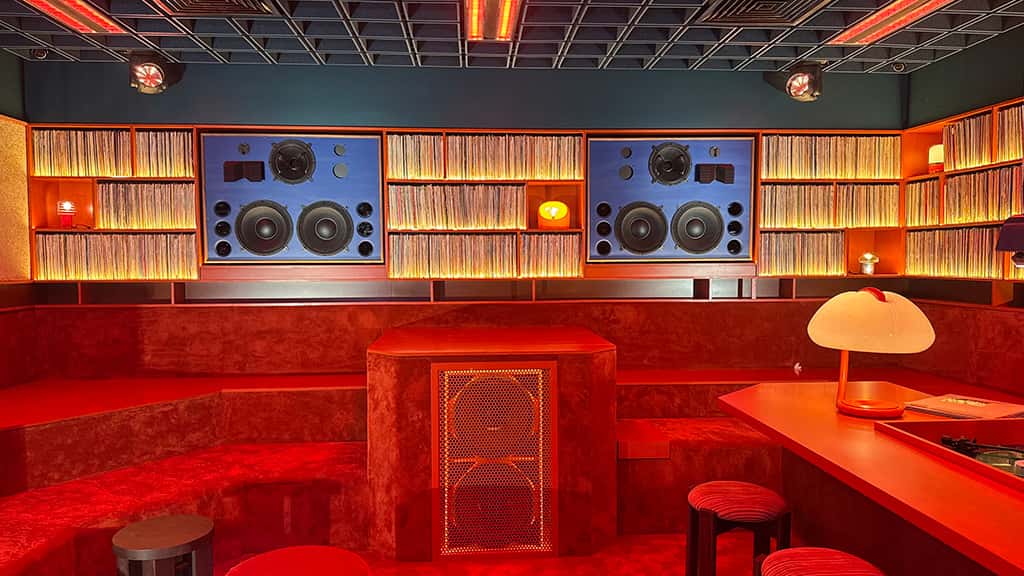
Walk into LB’s Record Bar and the first thing that stops you dead in your tracks is an imposing pair of walnut-veneered loudspeakers staring at you from the back wall. At a glance you’d swear they were 1977 JBL 4350 studio monitors – the iconic four-way, blue-baffle behemoths that once graced mix rooms and mastering suites from LA to London. Same proportions, same slotted tweeter, same multi-cell midrange lens, same pair of 15-inch woofers peering through that unmistakable grained veneer. Except these aren’t 48-year-old collectors’ pieces, they’re brand-new, 135kg apiece, custom-engineered reproductions built from the ground up by Technical Audio Group for Merivale – and they’re running modern Martin Audio commercial drivers behind that retro façade.
Anthony Russo explains: “Merivale showed me a render and said, ‘We want those blue 4350s.’ I told them straight: ‘Those are 48 years old. Fine at three metres in a control room in 1977, but not great for 200 punters on a Friday night in 2025. And if you do pick up a genuine pair for thirty grand and a DJ destroys a driver, good luck finding a replacement on eBay at 2am!’”
METICULOUSLY RECREATED
The solution was to meticulously recreate the 4350 aesthetic down to the look of the clips on the LF drivers, all with Martin Audio’s latest product. TAG started with the original blueprints scraped from the internet, then handed them to their cabinet maker with one brief: “It’s just a drawer with holes in it – make it look identical, but bulletproof.”
Externally, every visual cue is replicated. The slotted super-tweeter and mid/high slant-plate acoustic lens are 3D-printed replicas (the original slot tweeters Anthony bought for $1000 a pair now sit unused – “it felt sacrilegious to wire them in if they’re not going to sing”). The sextet of round ports is dimensionally identical to the 1977 design but properly flared this time to eliminate chuffing. The timber finish runs full-depth, the retro JBL-style metal clips are 3D-printed and painted, and even the blanking plates for the movable driver panels are there for authenticity.
Inside, though, it’s 2025 Martin Audio. The mid-high pack is a coaxial point-source system inspired by Martin Audio FlexPoint range – time-aligned, symmetrically loaded, driven by Martin’s own factory FIR presets. No more offset drivers fighting phase smear across the room; everything arrives coherently wherever you stand (or dance). The 15-inch woofers are inherited from Martin’s high-output bass series (think SX215), each in its own tuned sub-chamber with round ports carefully re-engineered to match the retro visual but deliver genuine, unflappable low-end. Extensive internal bracing, 18mm MDF throughout, bitumen damping panels and acoustic wool turn the cabinet into the acoustic dead-zone the original never was.
The answer to designing a system for LB’s was a collaboration between Martin Audio’s engineers and Anthony, and it is rubber-stamped as a ‘Custom Approved Solution’ (CAS). “We gave Martin Audio the internal volume and port specs we had to hit,” Russo explains. “They came back with an engineered, factory-approved design. Every driver lives in its own optimised enclosure inside the big box, independently powered and processed. It’s essentially a modern four-way [when combined with the Martin Audio double-18 sub] Martin Audio loudspeaker wearing a perfect 4350 get-up.”
“”
Every driver lives in its own optimised enclosure inside the big box, independently powered and processed. It’s essentially a modern four-way Martin Audio loudspeaker wearing a perfect 4350 get-up
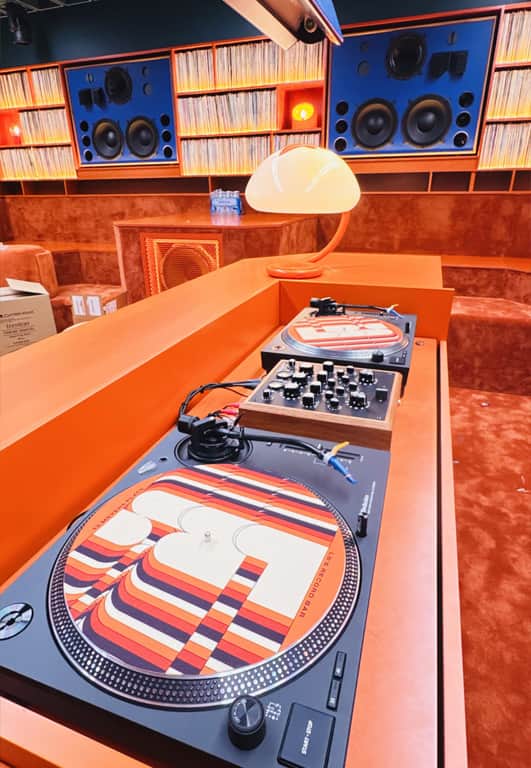
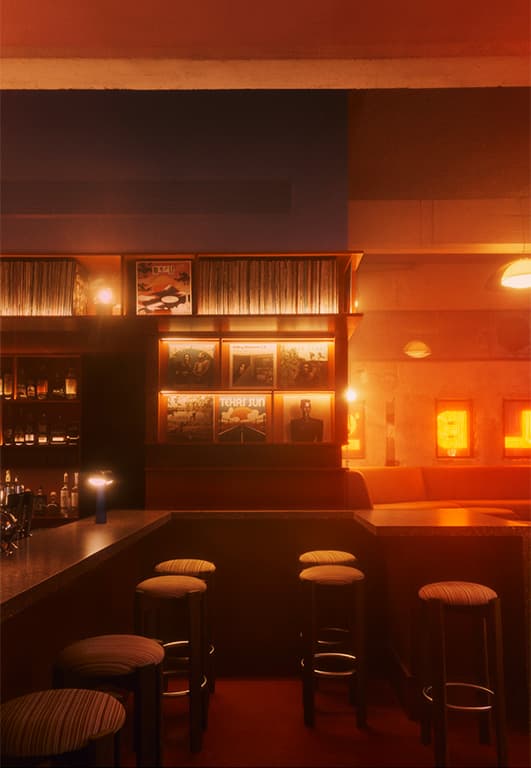
The decks are floating (immune to vibration down to 50Hz). Merivale group entertainment manager, Nick van Tiel, has coloured coded the record collection – effectively creating vinyl playlists for DJs depending on the time of day/week.
EFFORTLESS CHIC
The result is a system that looks frozen in 1977 but measures flat, throws evenly to the back wall, and – most importantly – will still be doing it reliably, night-in/night-out, years from now. Processing is handled by Q-SYS with remote cloud monitoring. As Anthony puts it: “You’re not here to muck around and be cool for a week. You’re here to make money over the bar for the next decade.”
Two pairs of smaller delay enclosures (same Martin Audio FlexPoint FP12 starting point, this time painted orange) fill the rear of the room, again factory-aligned and time-coherent. The entire system is tuned to be warm, effortless, and non-fatiguing even when the room is rammed and the DJ is hitting the QSC amps hard.
Step back, sip your negroni, and you’d swear you were looking at a pair of museum-piece monitors. Step closer and you realise you’re hearing something far better: retro aesthetics with absolutely no compromise on 21st-century performance or reliability.
NO CORNERS CUT
Glenn Rayner, Technical Director, at Merivale reckons the big investment in audio is worth it. He’s been leading the Merivale technical team for over a decade and understands the false economies of cutting corners: “We could have bought the originals but they’d never survive the programme material we throw at them today. We needed the look, but with modern engineering that can take a beating night after night.”
Interestingly, it’s the current generation that’s digging the LB experience the most:
“There are plenty of record bars in Melbourne, but the interest in LB’s has been huge because we didn’t cut corners on the audio. People are craving a genuine experience – proper vinyl, music sounding the way the artist intended.
“We’ve now got a lot of property in Melbourne now and some very big ideas. Consider LB’s a tasty little teaser of what’s coming.”
TAG (Martin Audio, Q-SYS): tag.com.au









RESPONSES